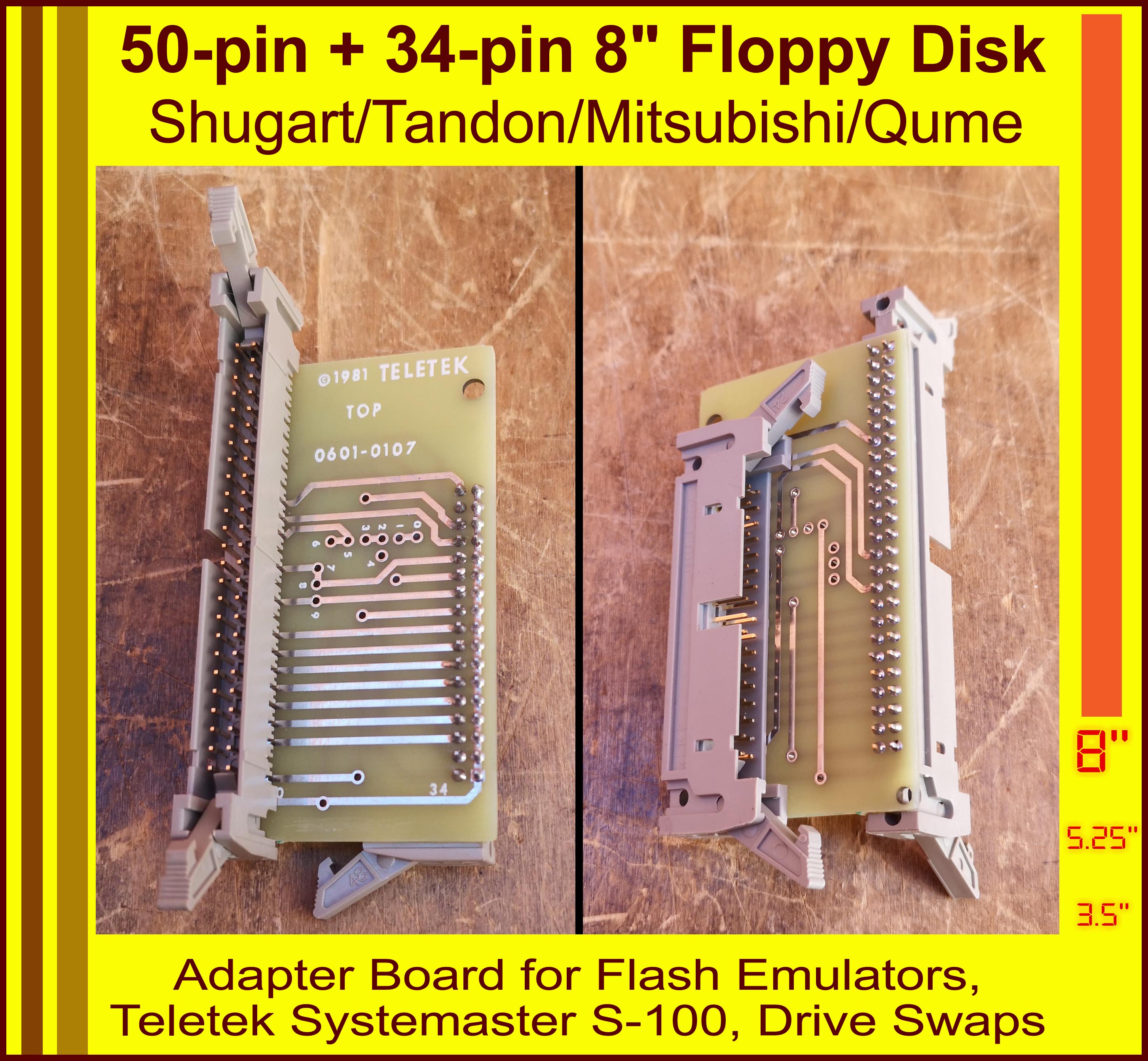
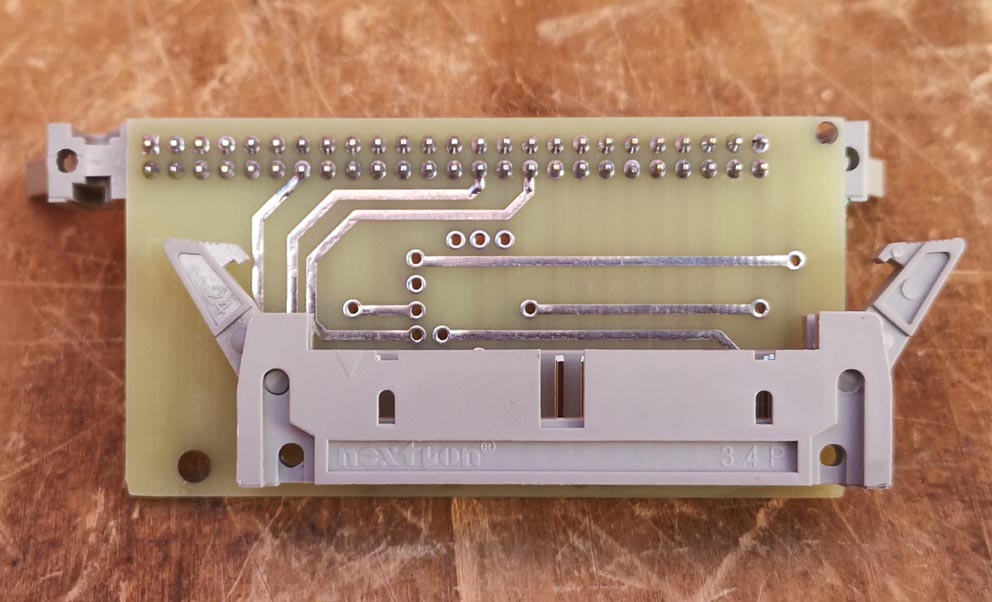
New 8"-5.25" Convert Floppy Drive Adapter 4 Flash Emulators, Teletek Systemaster
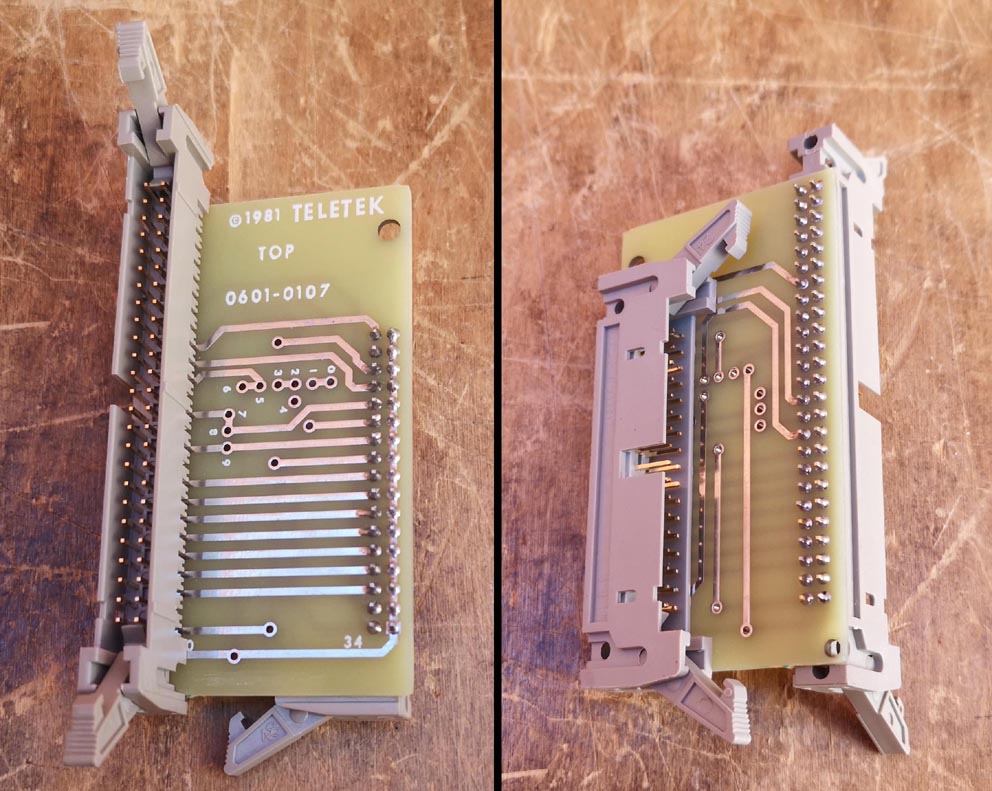
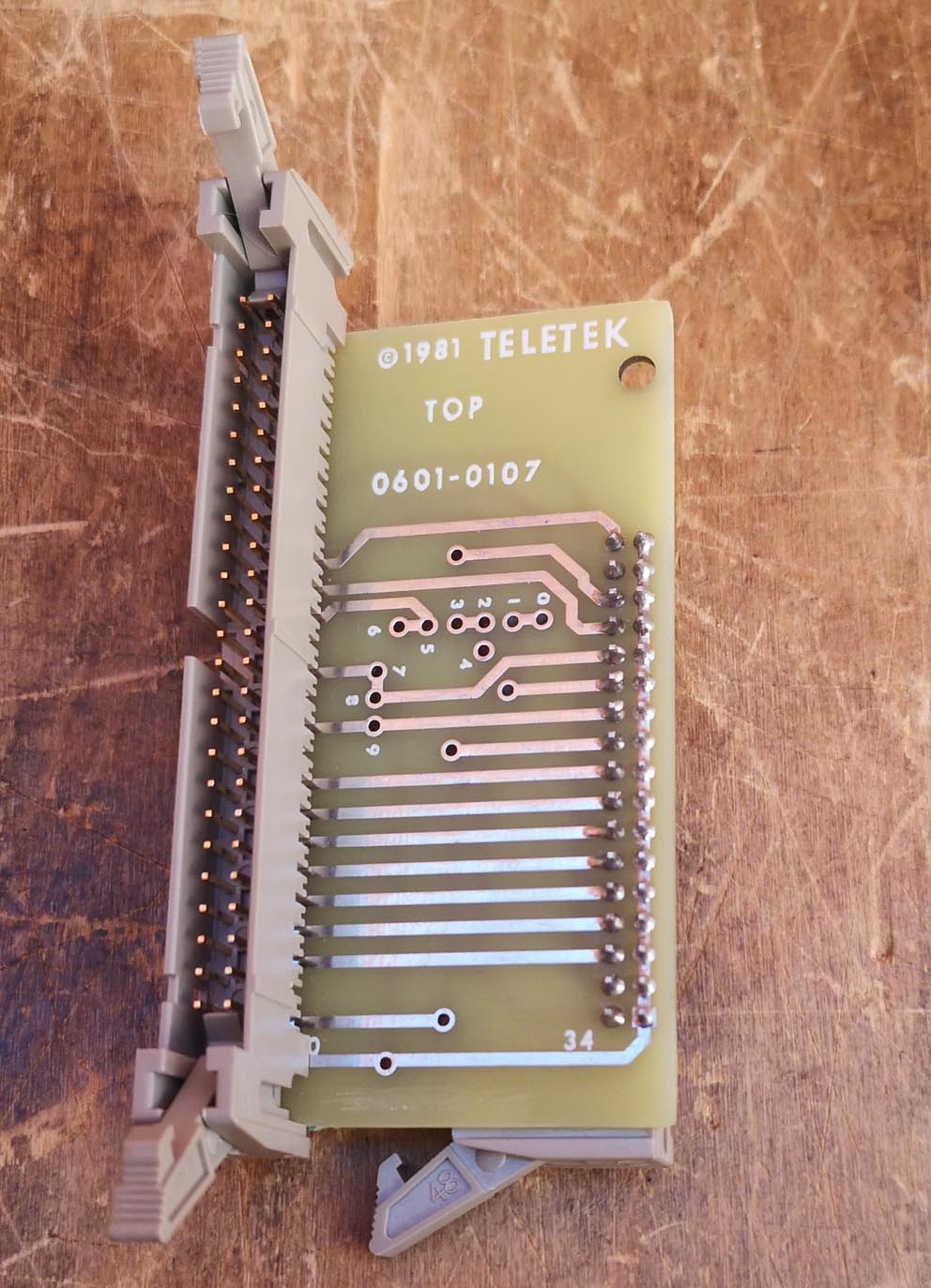
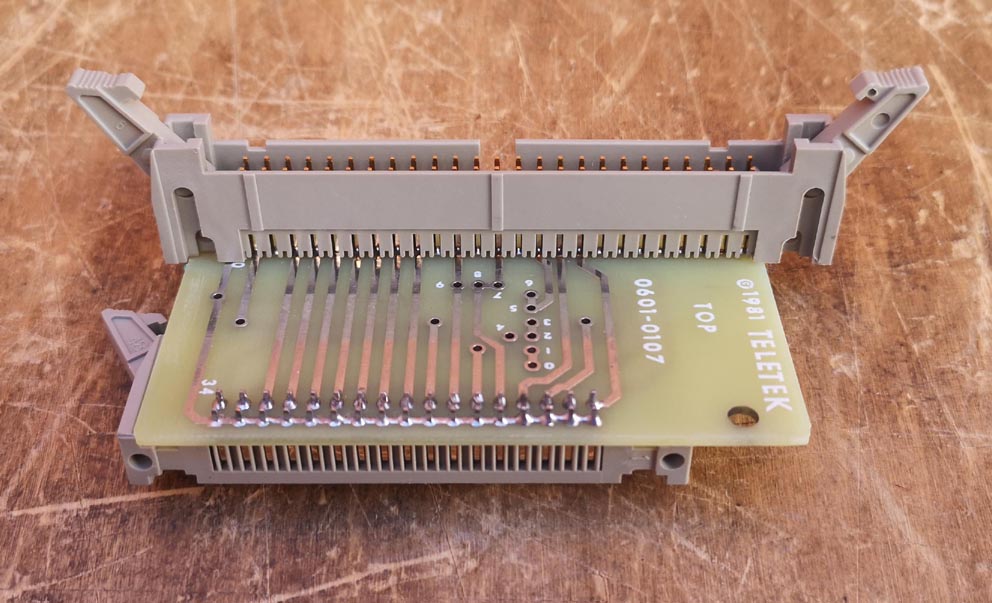
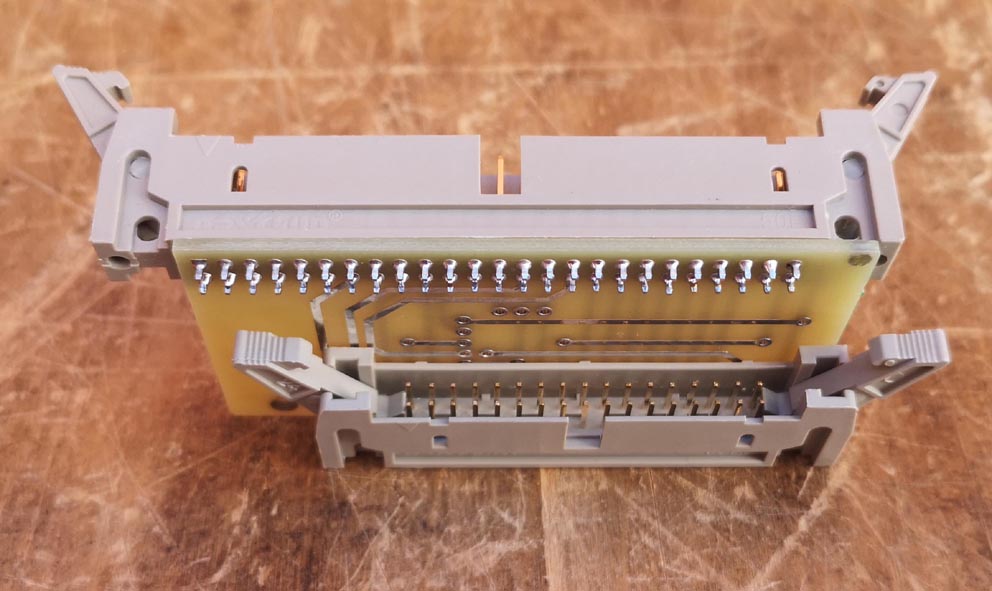
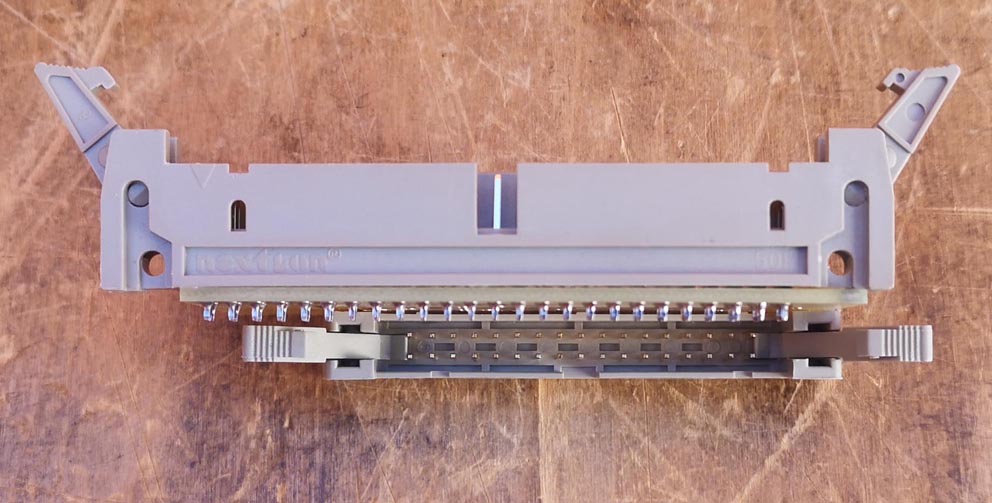
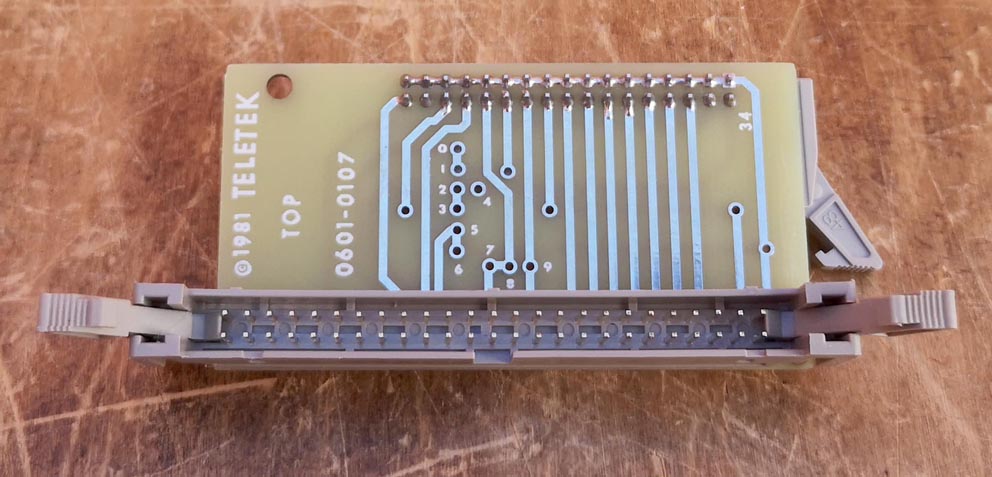
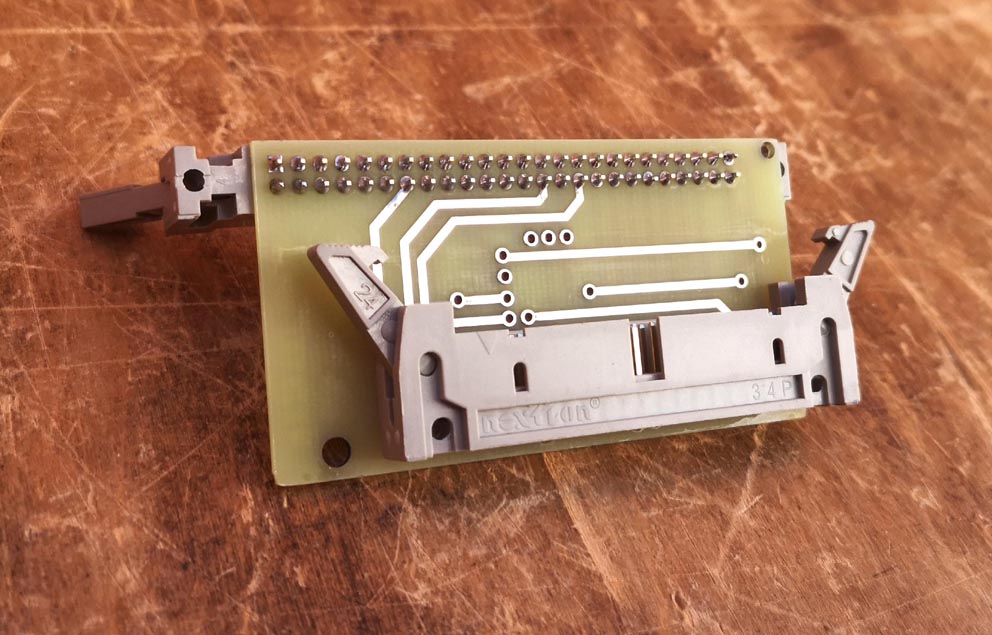
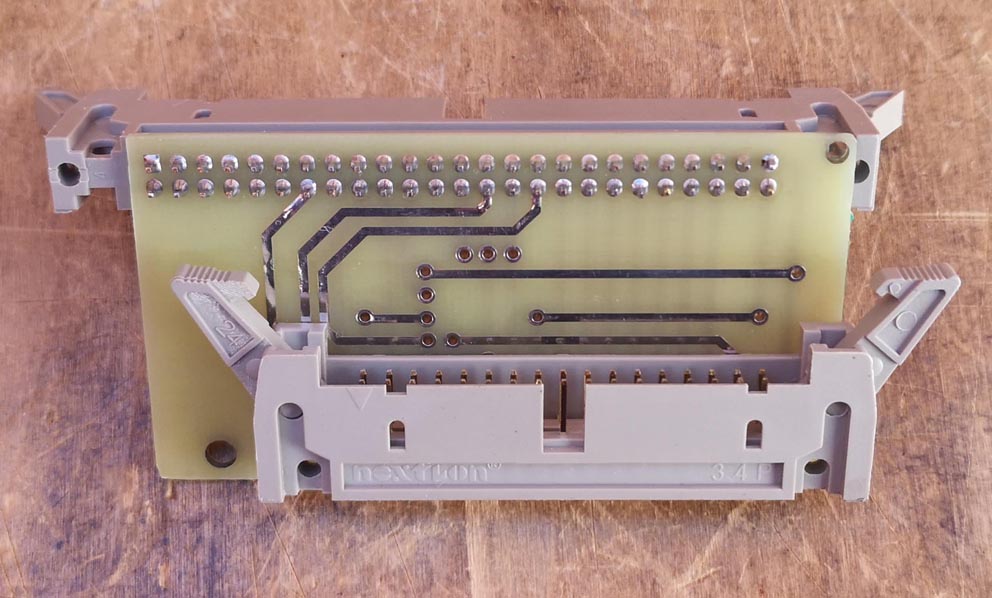
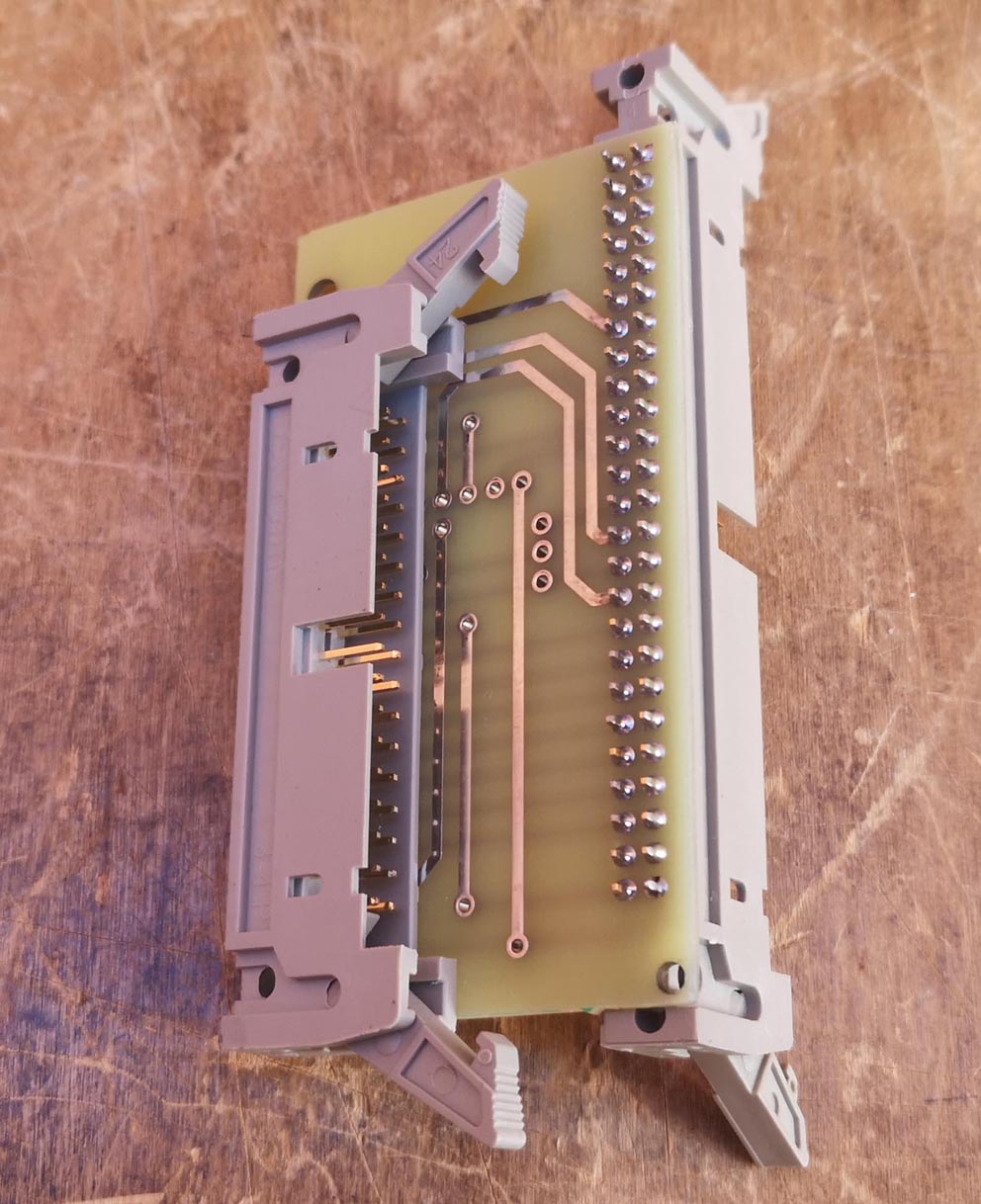
This listing is for a single piece floppy drive adapter board ONLY, not any floppy drives, Teletek Systemaster single board computers, etc., just the single piece floppy drive adapter board shown in the first 11 photos in the photo gallery.
-----------------------------------------------------------------------
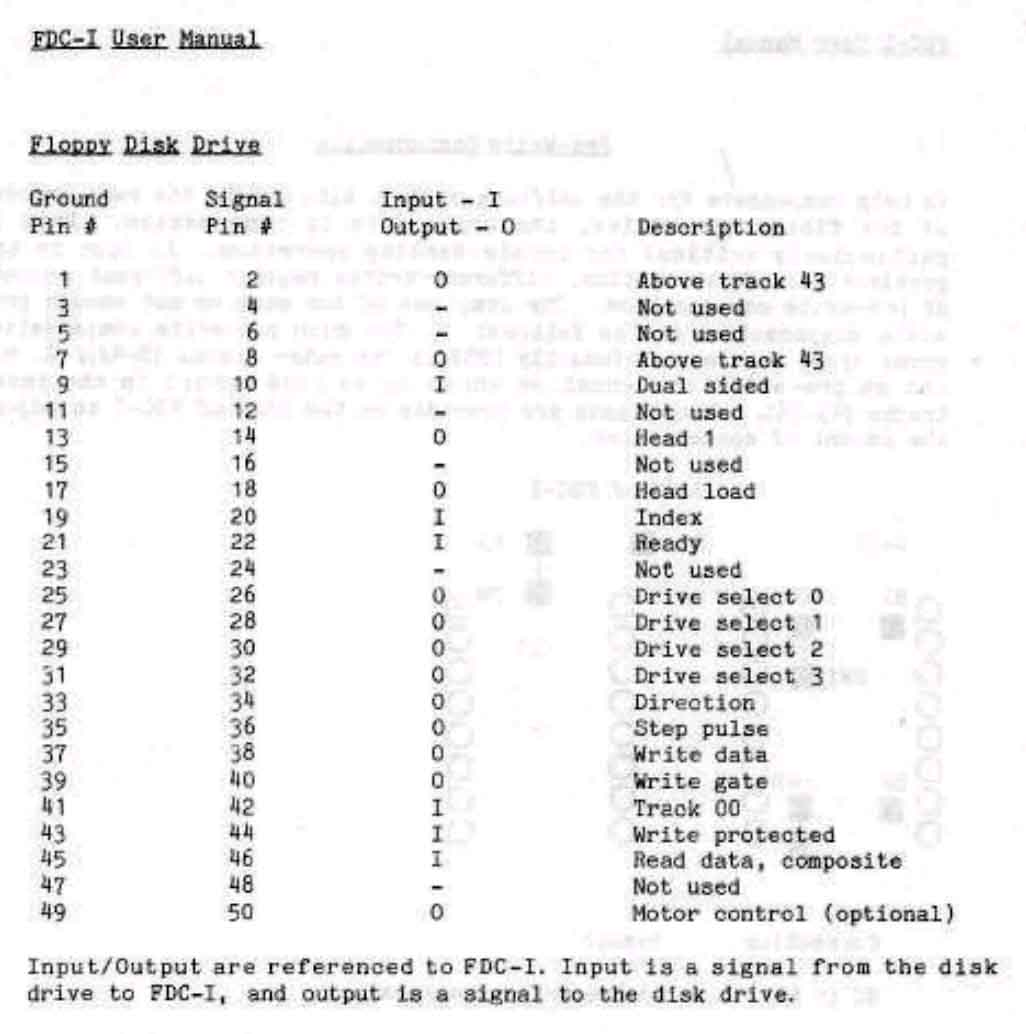
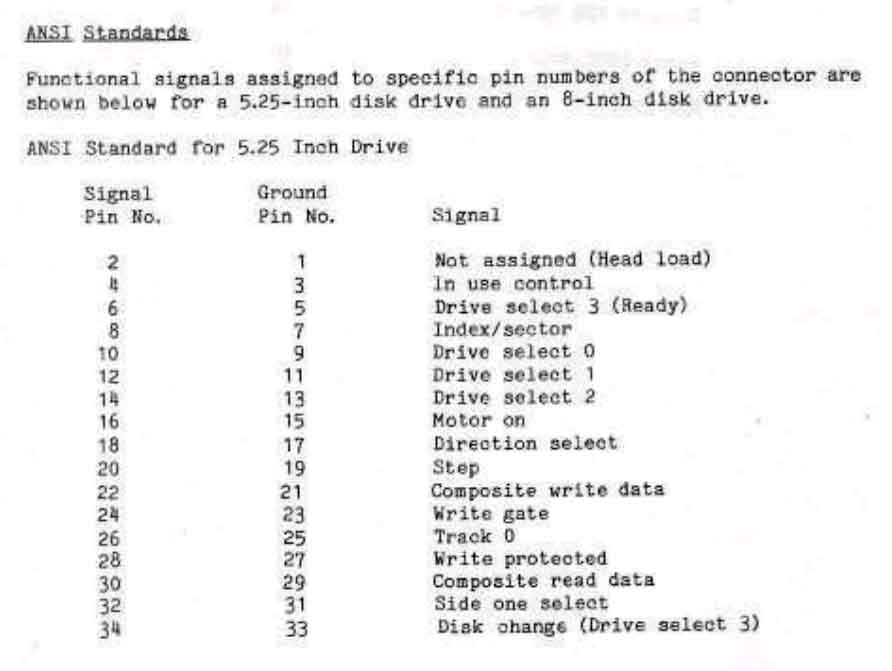
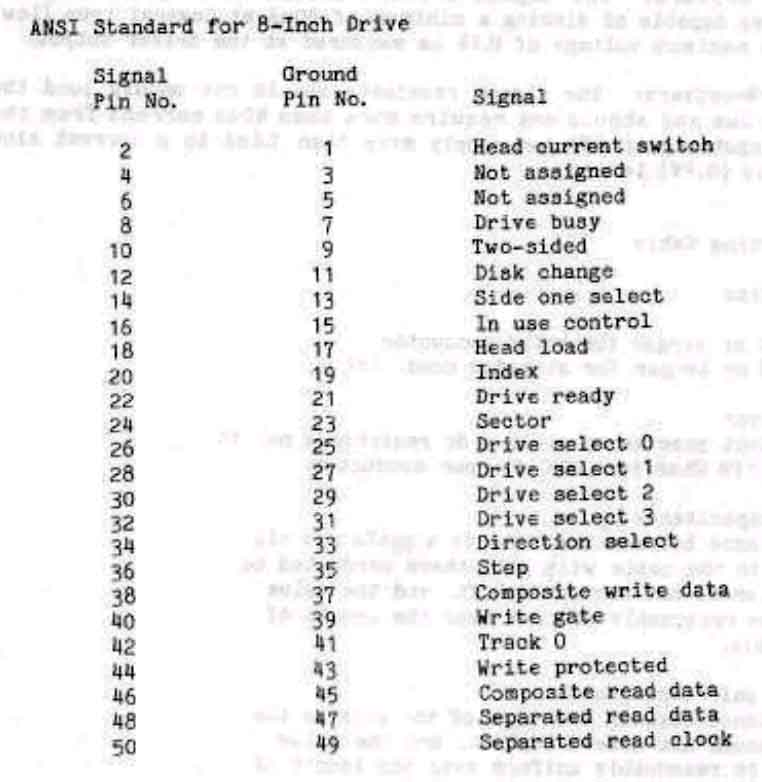
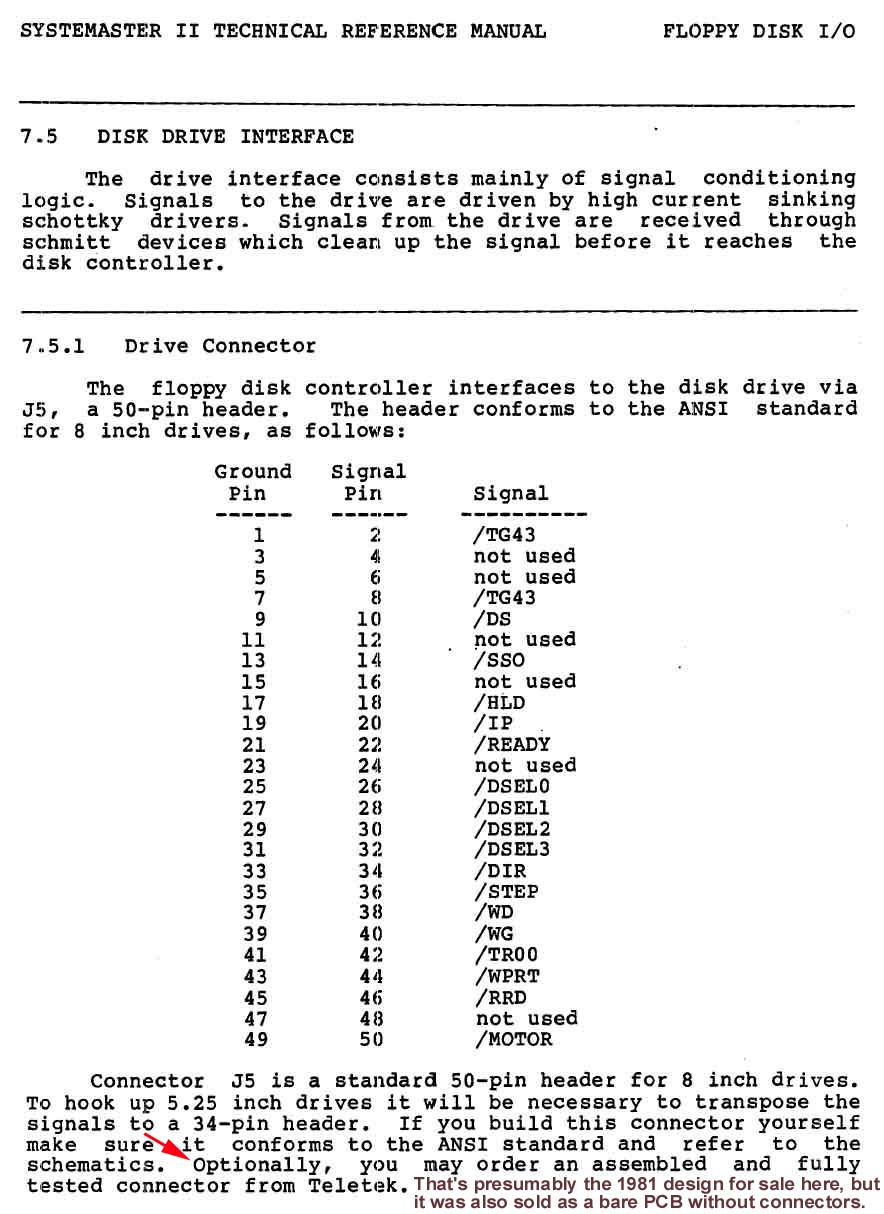
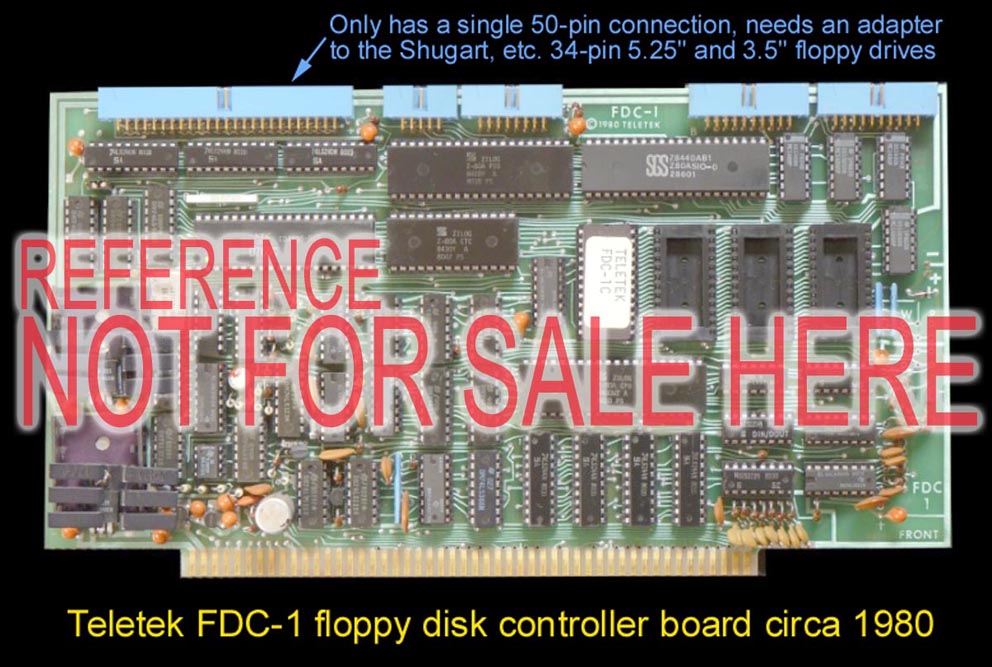
I don't know how the 1981 Teletek design works, or even exactly what it works with, but I've tried to include some found reference material here and in the photo gallery.
So this is completely unsupported by Synhouse and you are on your own there.
-----------------------------------------------------------------------
This is just a rare curio, I don't know if anyone wants it, there are lots of other ways to adapt 50-pin 8" floppy drive interfaces to 5.25" interfaces, some with more jumperable options, which may be useful for some setups you'd want to try.
Synhouse has LOADS of 8" floppy drives and related equipment like CompuPro/Godbout, Macrotech, etc. S-100 bus computer hardware (and the sleek trademark black powdercoated aluminum 1U Synhouse Synclavier Superfloppy rack in single and dual drive models will be joined by another one, a [hopefully 2U for half height and 3U for full height] welded, gusseted version for dual 8" floppy drives, initially for the half height Mitsubishi and Qume 8" drives in Fairlight CMIs, but also for the full height Shugart 801 and 802) for the last four decades, including Mitsubishi, Qume, Shugart, and Tandon TM848-02 8" floppy drives, and some setups for SSL 4000G automated audio recording/mixing consoles (Synhouse is also manufacturing parts for Neve and SSL consoles now). This gear has been obtained in so many buyouts over the years.
There was a stack of these old 1981 design boards here, just bare PCBs without connectors, which I had referred to in relation to Fairlight CMI (old high end music computer from Australia) 8" floppy drive interfaces when designing two new boards.
I decided to factory assemble some of these instead of just selling them as bare PCBs for DIY assembly (which is always inferior).
Yes, that is correct, these were assembled in the factory (and if the few I have here to sell actually DO sell, then I will probably send more to assembly as time permits), not soldered with hobby solder at my kitchen table after work like everyone else's, because managing manufacturing for Synhouse IS my work since 1999, and all Synhouse circuit boards (maybe except for a few simple pieces done during the 2020 fake pandemic lockdowns) are manufactured on contract in factories since June 1999, and that's been more than 100 different designs just since 2012, or maybe it's nearly 200 designs by now, I lost count and have rarely updated listings, as I keep doing more and more designs.
The week of this first listing of this one, Synhouse has come out with eight new products, seven of which are assembled circuit boards, but nothing fancy, just very, very high quality like no one else here on eBay can do.
-----------------------------------------------------------------------
I can only assume that these were originally used with plain 50-pin open headers, just snapped off of 100-pin snappable header strips. I guessed that because this one, like a lot of old designs, don't have room on the board for a proper box header. Some of them have the 50-pin and 34-pin connectors too close together so there's no room for box headers to fit, and this one can fit box headers, but they hang over the edge of the too-small board as you see here.
But when assembling a few of these in the factory, I decided to go all out and use super deluxe ejector headers, because 50-pin box headers ALWAYS break out the plastic end pieces after a few removals, because 50 pins is too long to not have proper ejector/latches to gently pry/lift the female cable connector out of the male header. This is a huge problem and plain box headers are NOT acceptable. And note that no one but Synhouse seems to be doing this with ejector headers or even acknowledging the problem.
And plain 50-pin open headers are even worse, bending the several rows of pins near one or both ends is almost inevitable............then after a while one pin just breaks off and it won't work anymore.
And I was then in the throes of assembling some more Synhouse Synclavier boards and sourcing components, so I used insanely high quality connectors for these you see here, a type used in industry and IT. This was kind of accidental, I'd meant to use high quality connectors, better than anyone else is using on their adapter boards for sure, but one step down from these you see here. And I overspent a little. Oh well.
-----------------------------------------------------------------------
I know almost nothing about it, but the Teletek Systemaster was a fairly famous SBC (Single Board Computer) for S-100 bus computers, and I think the Teletek FDC-1, Systemaster, and Systemaster II boards all had a single dual row 50-pin connector for interfacing to floppy disk drives, and this would require an adapter in any case, as even an 8" floppy disk drive doesn't have a dual row 50-pin connector on it, it's a 50-pin edge card connector, so it would normally use an adapter cable for that.
And those also supported 5.25" floppy disk drives, and whether or not they were meant to use 3.5" floppy disk drives, someone could have written the software to support 3.5" floppies (possibly with an alteration of the quartz crystal clocking the controller board, one very complex board manufactured by Synhouse supported two different crystal frequencies to change the floppy disk size), but the 5.25" and 3.5" floppy disk drives would normally have a 34-pin interface (initially the "Shugart interface", but there were others), with the 5.25" floppy disk drive having a 34-pin edge card connector and the 3.5" floppy drive having a dual row 34-pin connector (like the famous TEAC FD-235, but some others like the 1.44mb Sony trash in Apple Macintosh computers had only a 20-pin dual row connector, and got the power from there, too).
Some people selling this type of adapter board might say, "This board allows you to connect 50 pin, 8" floppy drives to modern (ish) 34 pin floppy controllers.", which is probably technically true in many cases (depending on how the wires are crossed), and that's what people will probably use it for if they buy this one (likely connecting it to the 34-pin interface on a flash floppy disk emulator), but that's not what it was originally made for back in 1981.
It was made for use with Teletek SBC boards for S-100 bus systems that had the ability to control many kinds of 5.25" and 8" floppy drives but only had one connector coming off the card, the 50-pin connector for the 8" floppy drives (a straight open header on the SBC-1 and Systemaster II, a 90° box header on the SBC-II). And, actually, no 8" drive had a dual row 50-pin just like no 5.25" drive had a dual row 34-pin, both used only gold edge card connectors, 50-pin or 34-pin.
BOTTOM LINE: I've provided the only reference material I have in the photo gallery, and you will need to figure out any applications of it yourself.
-----------------------------------------------------------------------
Please take a close look at the photos and please make note of the exceptionally high quality of assembly here. No one else making adapter boards and selling them here on eBay even comes close to the Synhouse quality. NO ONE. The quality of componentry is astounding across the Synhouse line of boards such as this one.
Synhouse has vastly greater manufacturing and sourcing capability than anyone else selling here on eBay, and it's not even close. Go on and click the Synhouse listings and look at the last 90 days of completed/sold listings, and see that Synhouse is a serious supplier of high quality componentry that is NOT CHEAP, from 1980s drum machines on up to supplying a factory making current year model $150,000 audio mixing consoles.
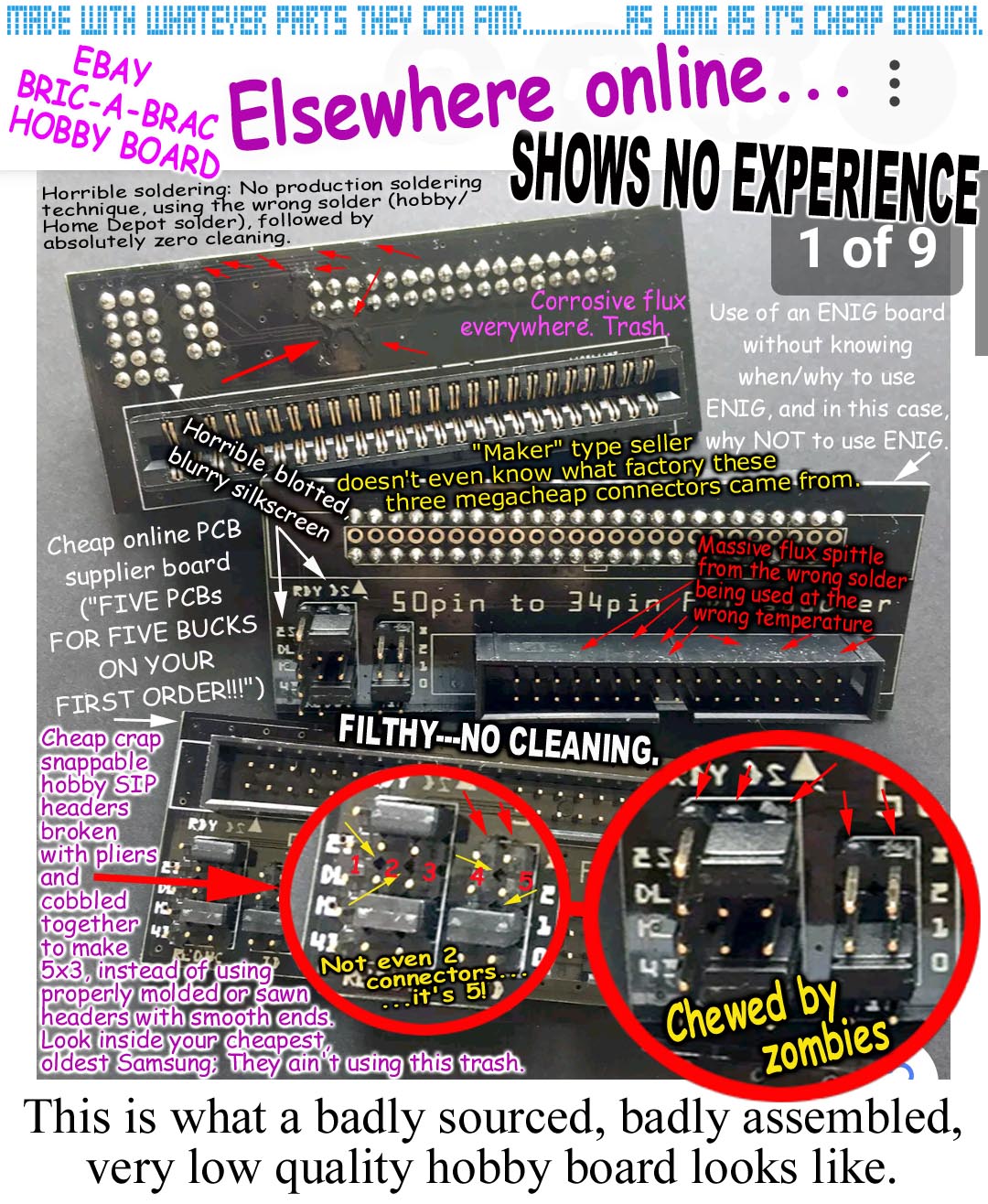
By comparison, in terms of the quality/detail of materials, componentry, and assembly/soldering/cleaning, everyone here on eBay but Synhouse is selling absolute trash, partly because NONE OF THEM bring any manufacturing experience to the table when they start kicking out their maker "products" like adapter boards, which are dime a dozen here on eBay, and one example seen 10/19/2021, three years ago here on eBay is noted for having more quality problems than could even fit on the page. I had to stop pointing out problems and solutions to them because there was no more room.
A good number of Synhouse connector adapter boards (for SCSI, floppy, etc.), service extender boards, etc. are being introduced now, after having only had a few in the past and rapidly selling out because not many were made at first (such as the 34-pin edge card floppy disk drive adapter to connect 3.5" drives/flash emulators to 5.25" edge card interfaces, about 110 were quickly sold out when there was no way to manufacture more of them because of muh pandemic and muh supply chain crisis), and I'm pointing out what's wrong with the others, as time permits, because the quality/detail/assembly/construction problems on the ones sold by others are limitless and neverending, and there's no reason for Synhouse to be undersold by noobs sticking unsuspecting buyers with trash boards, selling to buyers who also apparently don't know a lot about it, so I'm providing the information as I go.
-----------------------------------------------------------------------
Optional reading/appendix follows below:
-----------------------------------------------------------------------
A word about quality and detail:
Real factory assembly with production soldering is always preferable. Home hand soldering DIY style is inferior from a few standpoints. That's just the way it is. Two of those reasons are detail and quality. In my entire career, I've never seen one of these home DIY eBay seller guys come out with a properly assembled/soldered board, and this even goes four decades back to some of the late 1980s MIDI interface boards, and some recently seen 1990 work from one of the Synhouse competitors (done almost 9 years before Synhouse officially incorporated in 1999) was an absolutely horrifying mess of jumper wires, tape, and solder flux all over the place, and yeah, it didn't work anymore, not a big surprise after 34 years of excess flux gassing out over all the connections. This is the inevitable end game for a lot of badly made boards: Self-destruction.
These chimps almost always hit the trifecta; 1) Using the wrong solder (a roll of hobby solder to solder it by hand), 2) using the wrong soldering technique, and 3) following up with no cleaning at all (which is in even greater need because of the first two screwups, it might have gotten by with no cleaning at all if it had been properly factory soldered with the right solder, at least in some cases). 90% of the solder sold at DK/Mouser are just ignored by these guys, they don't even care to know what it is, because it costs 10x as much as the roll of hobby trash solder they always use. Well, there's a reason why it costs more and a reason why ALL the customers for that solder are making money and these guys are not, those real companies like Synhouse are selling into a sales channel with an expectation of quality that requires those specialized materials.
And it IS specialized, because, conversely, the production solder materials used for the Synhouse MIDIJACK, etc. wouldn't work very well soldering up a bunch of corroded/tarnished old switches, wires, and resistors from the electronic surplus shop. That WOULD require a higher flux solder (meaning it would need to be followed by even MORE cleaning, which these guys obviously don't do).
The production of consumer grade circuits, metal, and other parts has been 100% overseas for so many generations now that there's almost no one left in the first world who has ANY actual manufacturing experience in these things (and I do mean "these things", making airplane parts at that plant in Wichita doesn't count, it only shows what Rockwell hardness documentation is and how to make things that are too expensive for consumers to buy), so now in the 2020s with all these little niche/vintage market specialties, the car is being driven by absolute know-nothing "maker" types who, collectively as a group of millions of guys, don't bring even five minutes of actual manufacturing experience to the table.
And their customers don't know any better, either, which is part of why I'm trying to bring the buyers up to speed by teaching them what quality is and what good details are and why it should be paid for, or at the very least, to know that one item that is much cheaper than another is poorly made of crap materials components, and therefore if they really want to buy it, fine, but it SHOULD be at a drastically lower price than the superior quality Synhouse item.
And you see that right there benefits me, as I have tremendous price advantage on some materials, componentry, and engineering/labor line items, that is, if all else is equal, and I'm not using more expensive parts for some reason (it's the COST of running the company and doing things properly that is the major Synhouse expense, and almost none of the competitors have any of these expenses because they aren't real companies, 11/2024 I just paid 1,800 for the CAD drawing of a single part of an upcoming Synhouse product, I'll live and die without having a single competitor who's E V E R paid out 1,800 for a CAD drawing, and it's the gross profits from the sales of existing Synhouse products and services that pay for that), so if they are underselling me, I could still be making more profit at their same selling prices, but I shouldn't need crawl on the floor to get low prices when I'm selling significantly superior items into a very, very finite sized market (the number of people who can use it doesn't increase by me lowering the price, there are only x number of vintage target machines out there, and that number is dropping, not increasing, so I'll never sell 10,000 pieces of anything).
These eBay/home guys may spend 8 minutes badly soldering a connector adapter board while my girls do them in 43 seconds each and the result is 10x better than that guy ever gets, which is not surprising since they have 15,000,000x more recent production experience, and this forces the eBay/home guys into working many, many hours for free and they end up counting only the cost of PCBs and connectors into their imaginary "profit", without even counting their labor cost when I have ALWAYS had to count my labor cost.
I knocked out my first MIDI competitor in 2000 that way, the Synhouse product was made robotically in the factory in Simi Valley and sold for $99 while theirs was made with 6-8 hours unpaid sloppy home hand labor after work to sell for $169 when the components alone were costing $220/each, this was a "loss leader" strategy that didn't pan out and they are 24 years gone now (and YES, Synhouse is making money on these products and any that aren't profitable are shut down swiftly [if you EVER see a price reduction on a Synhouse product, and I can only think of two of those off the top of my head, plus those that never seem to get a price increase, this means the stock is being sold off and it won't be continuing in production], those profits pay for the development/manufacturing of more and more and more Synhouse products, that's why I have more catalog than everyone else combined instead of giving up because it's too hard always selling at a loss, and I have kept items in production for as long as 26 years now).
So the customers for these simple adapter boards, etc., who are mostly relatively electronic/repair/DIY familiar, should try to learn a little more about what quality and detail is, and I'm pointing that out in some of the photos and in these writings.
Customers show me things all the time, and I'm just astounded by well accepted products that are SO badly made, like someone showing me their ZuluSCSI board setup, good grief, that design/manufacture shows absolutely NO manufacturing knowledge and background, or flash floppy emulator boards where one very stupid noob mistake in the design makes the thing 3x as expensive to assemble, and several mistakes made in choosing the items on the bill of materials makes it MUCH more expensive to make and even further increases the assembly cost, and leads to a less durable and therefore less reliable board.
And no, I'm generally not impressed by the videos from the self-proclaimed soldering experts (who almost never actually make a living from a business that uses their skills and judgment), though these are mostly showing their SMT surface mount soldering techniques and less of the pin through hole board/soldering style we are discussing here, I've never seen industry utilizing these types of tricks and techniques, as they are time consuming and ultimately very expensive, and not conducive to production trained factory workers doing them.
This is similar to the 3D printing geniuses all over social media and videos, can you actually see them making money commercially selling the rough surfaced crumbly 3D printed garbage they are making?
Of course not, except for making money from the video sponsors they are shilling for (for example, 3D printer Matt Perks/Huel AKA Hurl mocking people eating "Another sandwich!" instead of having a meal of mixing Hurl powder in water and drinking that for lunch).
As time permits, the new Synhouse designs are sent to factory PCBA assembly, not soldered with hobby solder at the kitchen table after work like everyone else's, because managing manufacturing for Synhouse IS my work since 1999, and all Synhouse circuit boards (maybe except for a few simple proof-of-concept test pieces done during the 2020 fake pandemic lockdowns) are manufactured on contract in factories since June 1999, and that's been more than 100 different designs just since 2012, or maybe it's nearly 200 designs by now, I lost count and have rarely updated company board listings, as I keep doing more and more designs faster than I can update the documentation. Sometimes a new Synhouse product design takes only half a day (if it's only two generic connectors on a 2-layer PCB and no active circuitry, power supply, enclosure, etc.), then I can move on to a few more product design projects, as my part of the factory production is usually just my own in-person worker instruction and supervision of the work itself, which is less and less needed as time goes on and the suppliers get a better handle on making the Synhouse products.
The week of this first listing of this product for sale here, Synhouse has come out with EIGHT new products, seven of which are assembled circuit boards, but nothing fancy, just very, very high quality like no one else here on eBay can do. And every one of them had PCBA assembly in a factory.
Synhouse is utterly peerless in this regard.