5.25--3.5" Floppy Drive Emulator Adapter 34-pin Dual Row Female--34p Edge Card
Please note the cheap shipping, it's priced as USA and worldwide for one piece, but free on any additional pieces.
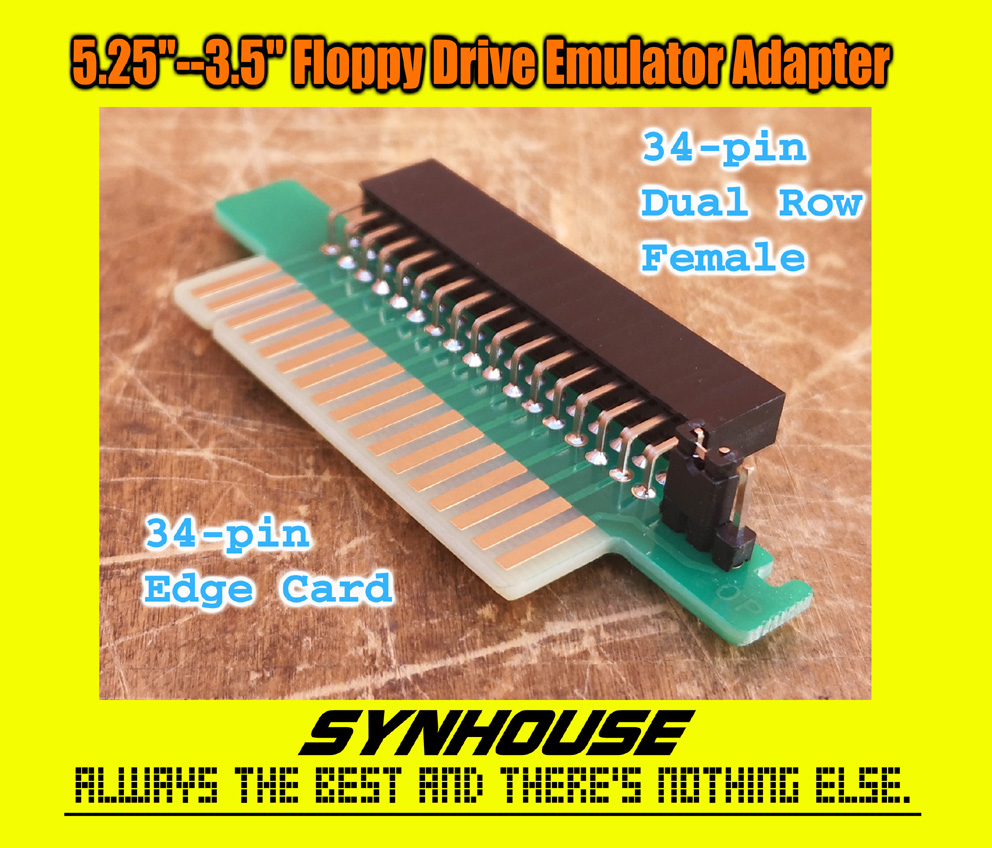
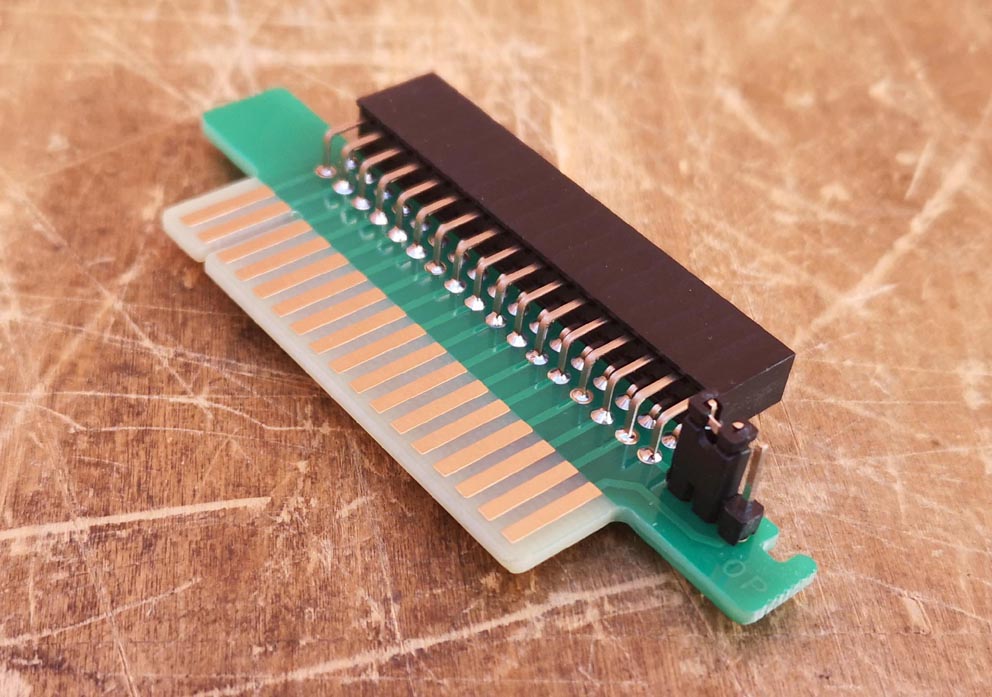
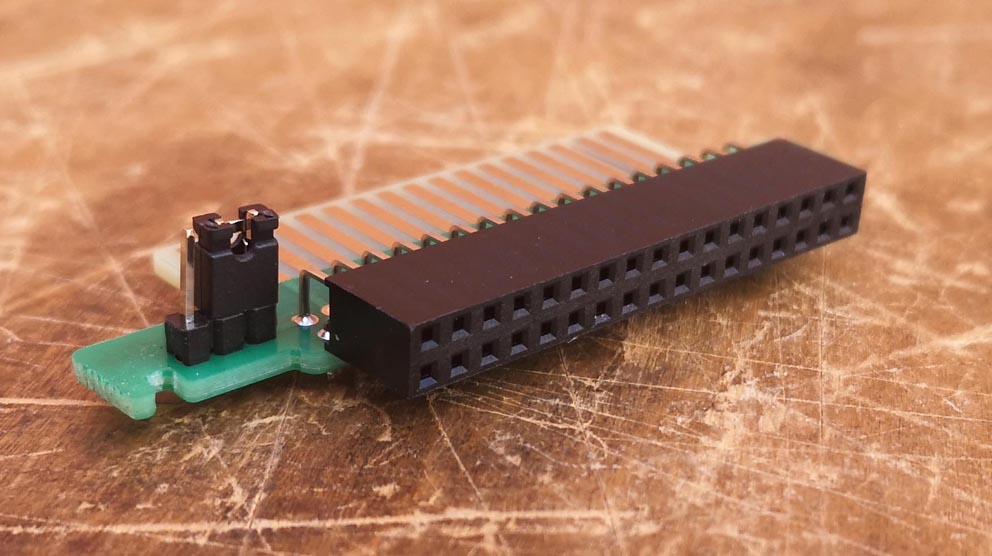
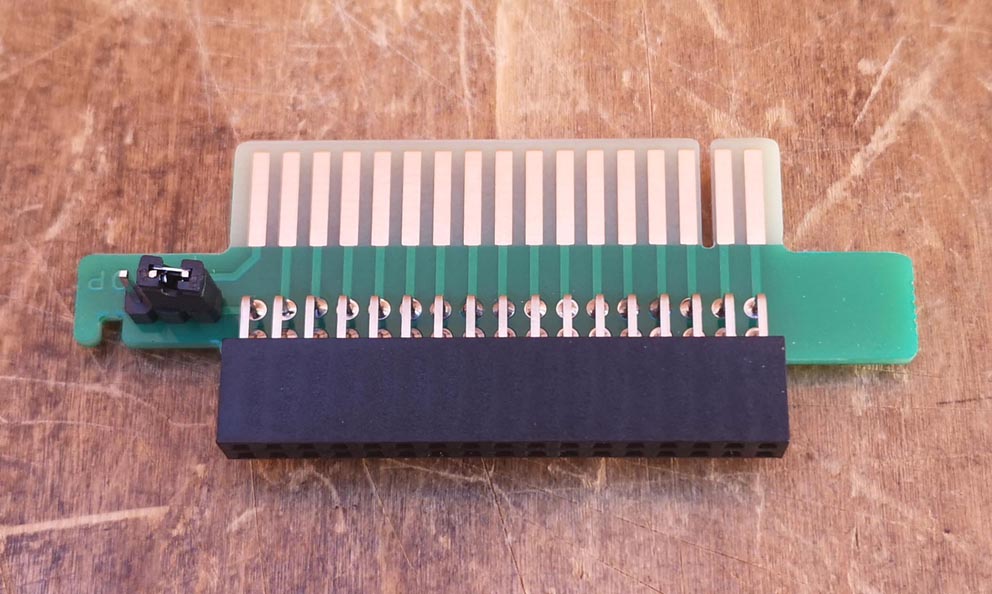
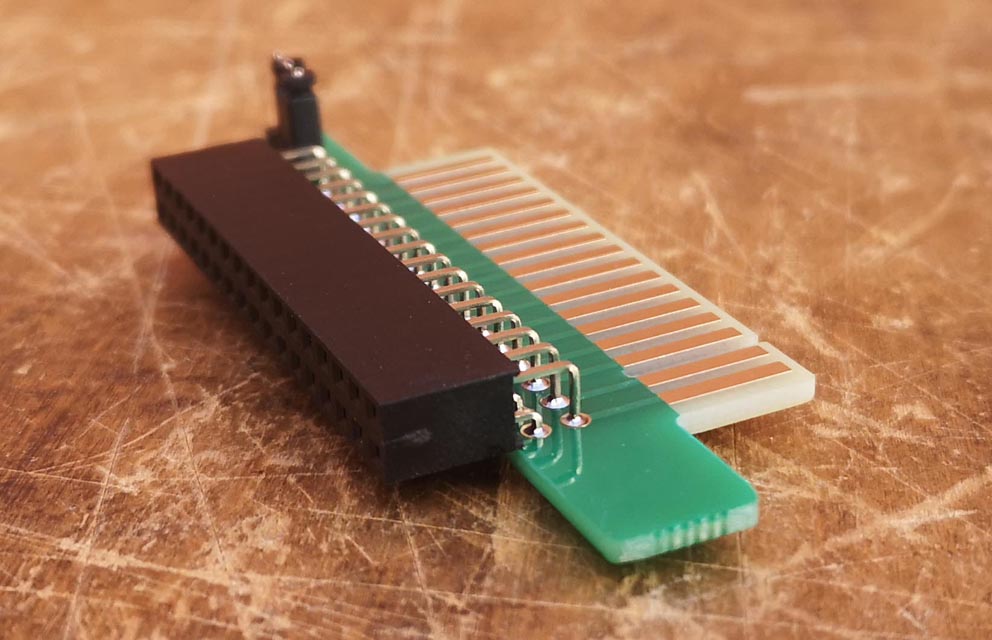
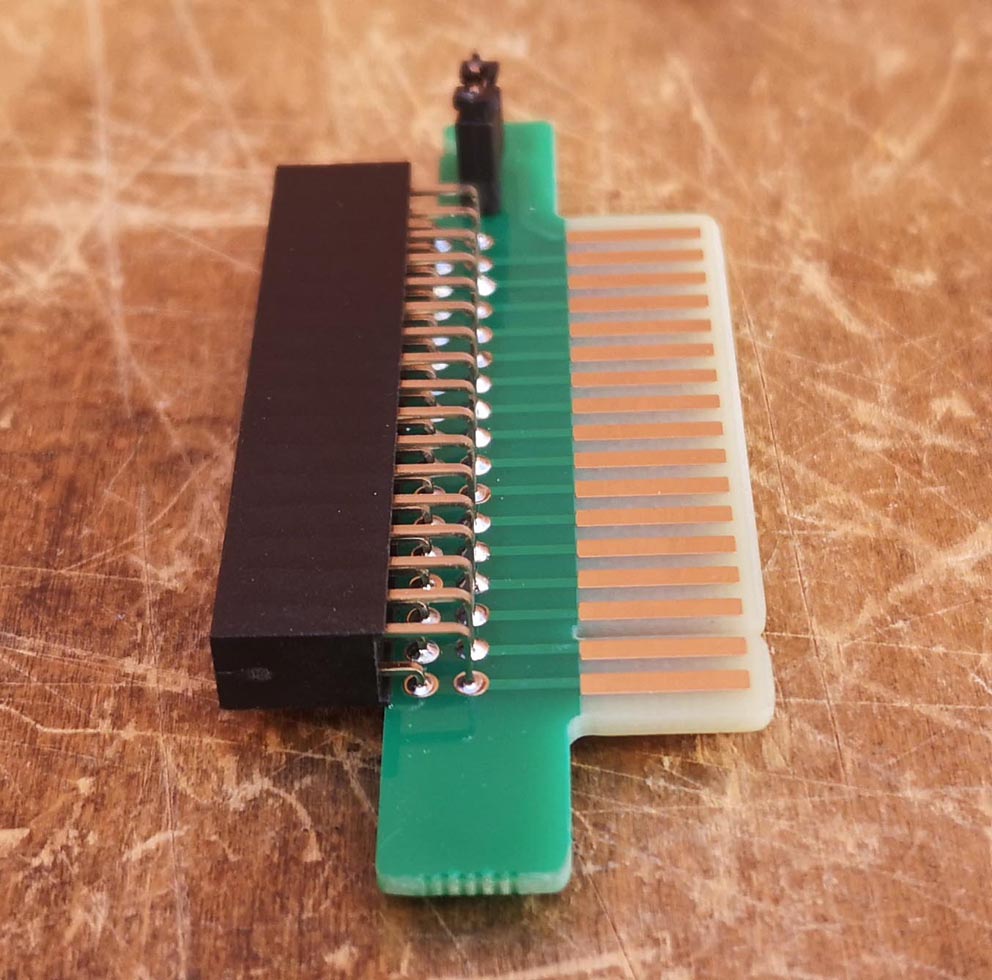
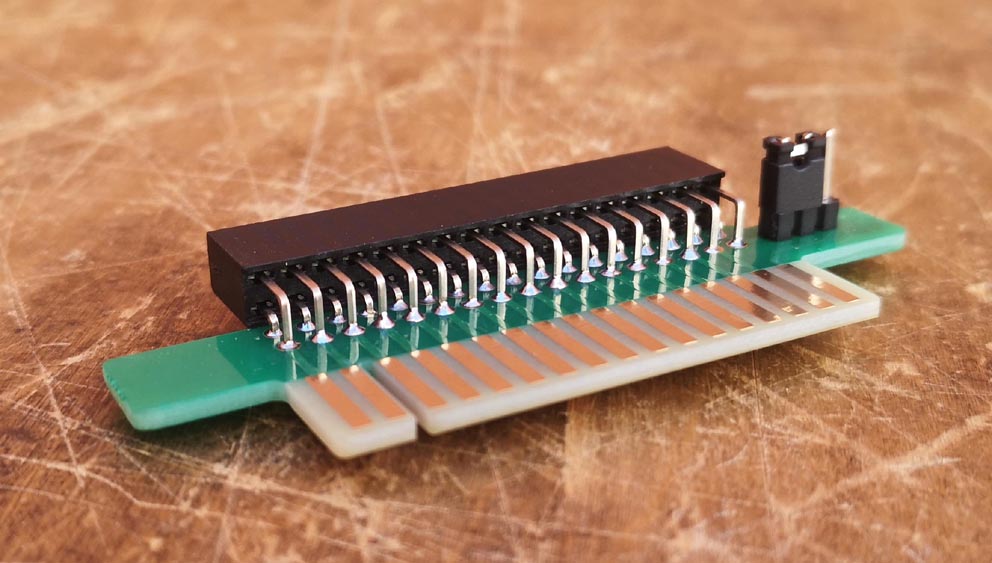
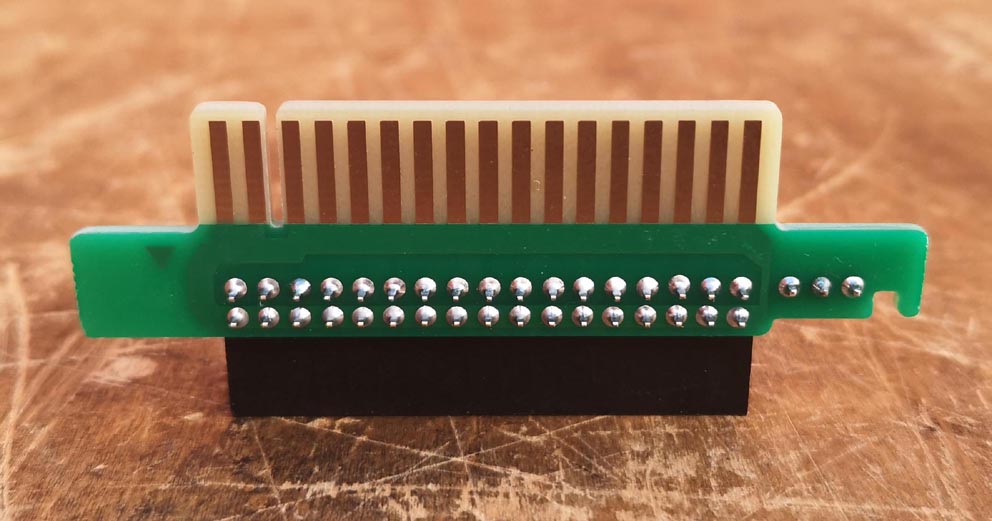
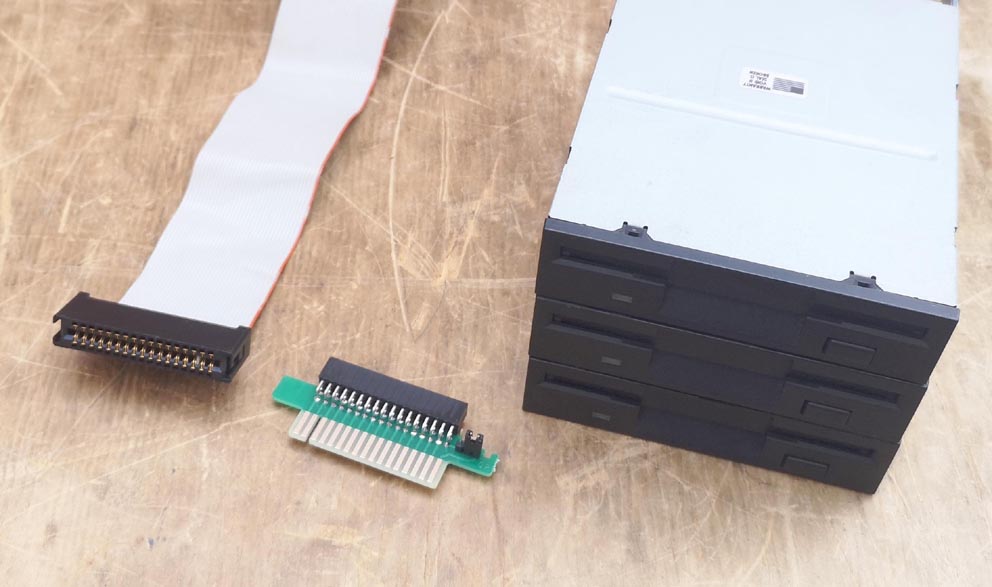
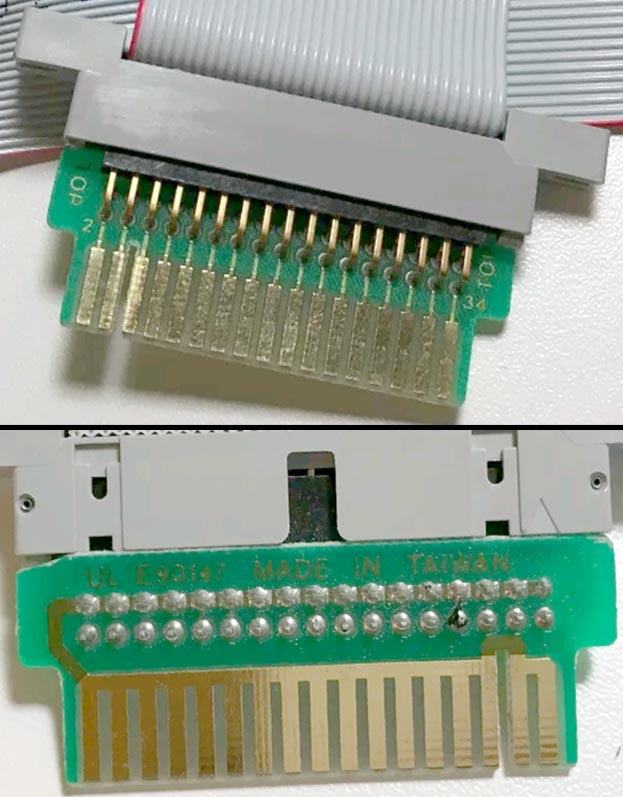
This is a VERY high quality 5.25" 34-pin male card edge to 3.5" 34-pin female dual row 34-pin edge card adapter. It is a thick CNC routed FR4 circuit board with gold plated connections on both sides of the PCB for the edge card connection, gold plated pins inside the 34-pin dual row female receptacle, gold plated pins on the 3-pin jumper header, and gold plated contacts inside the shunt jumper.
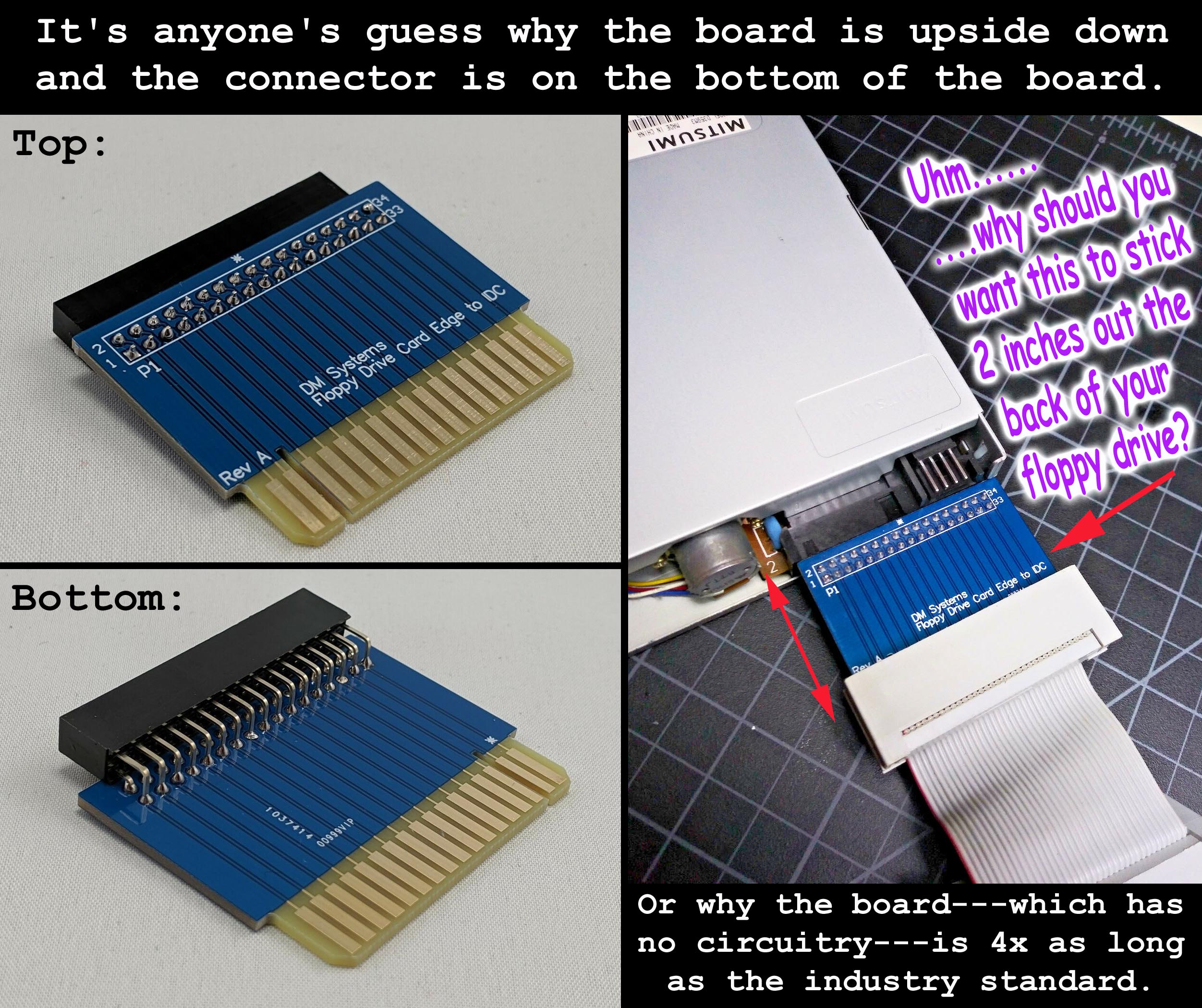
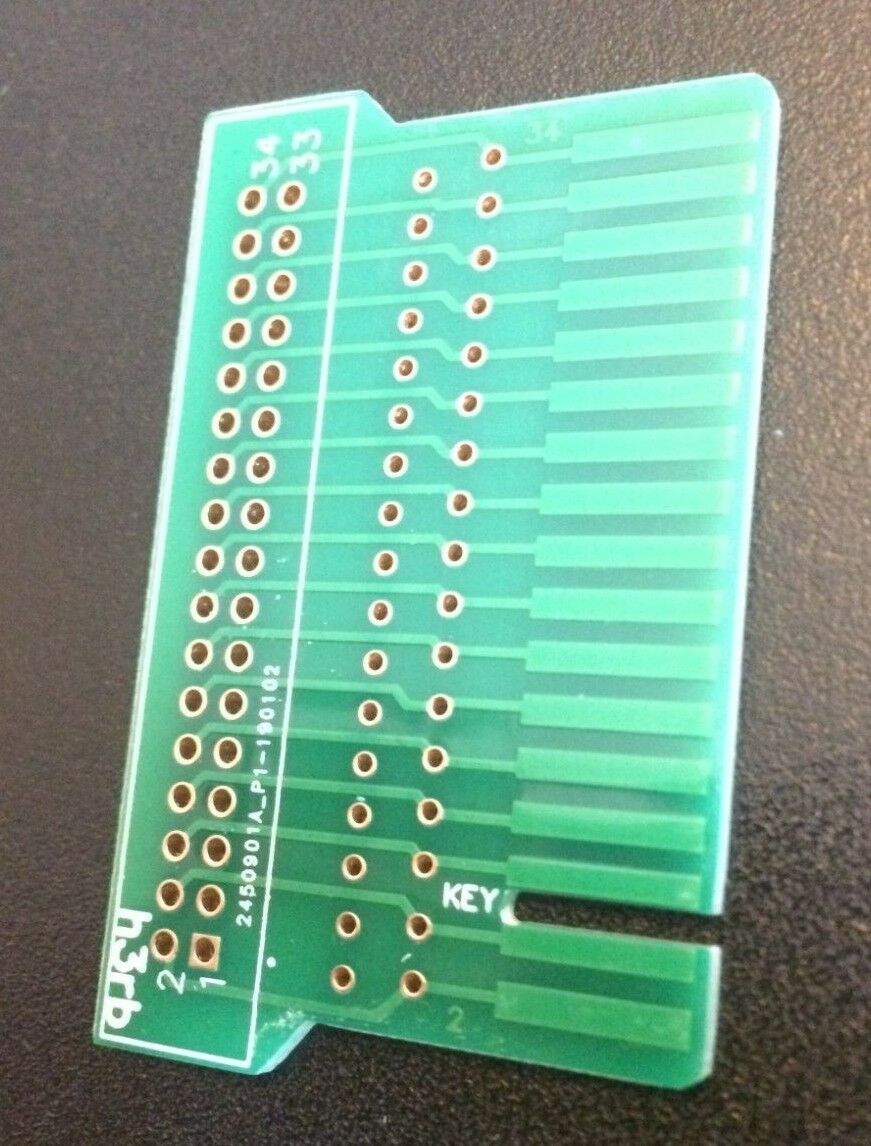
It is higher quality than the old imported ones, and vastly higher quality than the garbage that "maker" people have been making and selling on eBay. There's been at least six different sellers of those on and off eBay for the last two years I've noticed.
In fairness, two of them promise a lot of flexibility that will be fairly easily obtained (relative to a standard one like this) with their boards, and if you need that flexibility, you should buy those while they last instead of this one.
And I say "while they last" ..........because only Synhouse lasts.
Synhouse Multimedia Corporation started year number 26 August 1st 2024. The famous Synhouse MIDIJACK went into production June 1999 and is still in production and is still stocked in 2024. Nobody else can say that about a software-based computer controlled electronic music product with interfaces.
And Synhouse has 200 eBay listings, with a third of those designed and manufactured by Synhouse. Who else can say that?
And almost none of the 200 items in the Synhouse eBay can be bought anywhere else in the world today, on or off eBay. Who else can say that? Click on completed/sold eBay items and see who else could have completed all those deals. NO ONE.
But 95% of all floppy applications won't need or use this flexibility and every single time having to configure an entire board that can make any connection to anything isn't really any easier than just hand wiring the connections yourself without buying their dumb little kid's science project kit from them in the first place. And one of them expects you to supply your own parts (connectors, resistors, etc.) for their project. With a capital L.
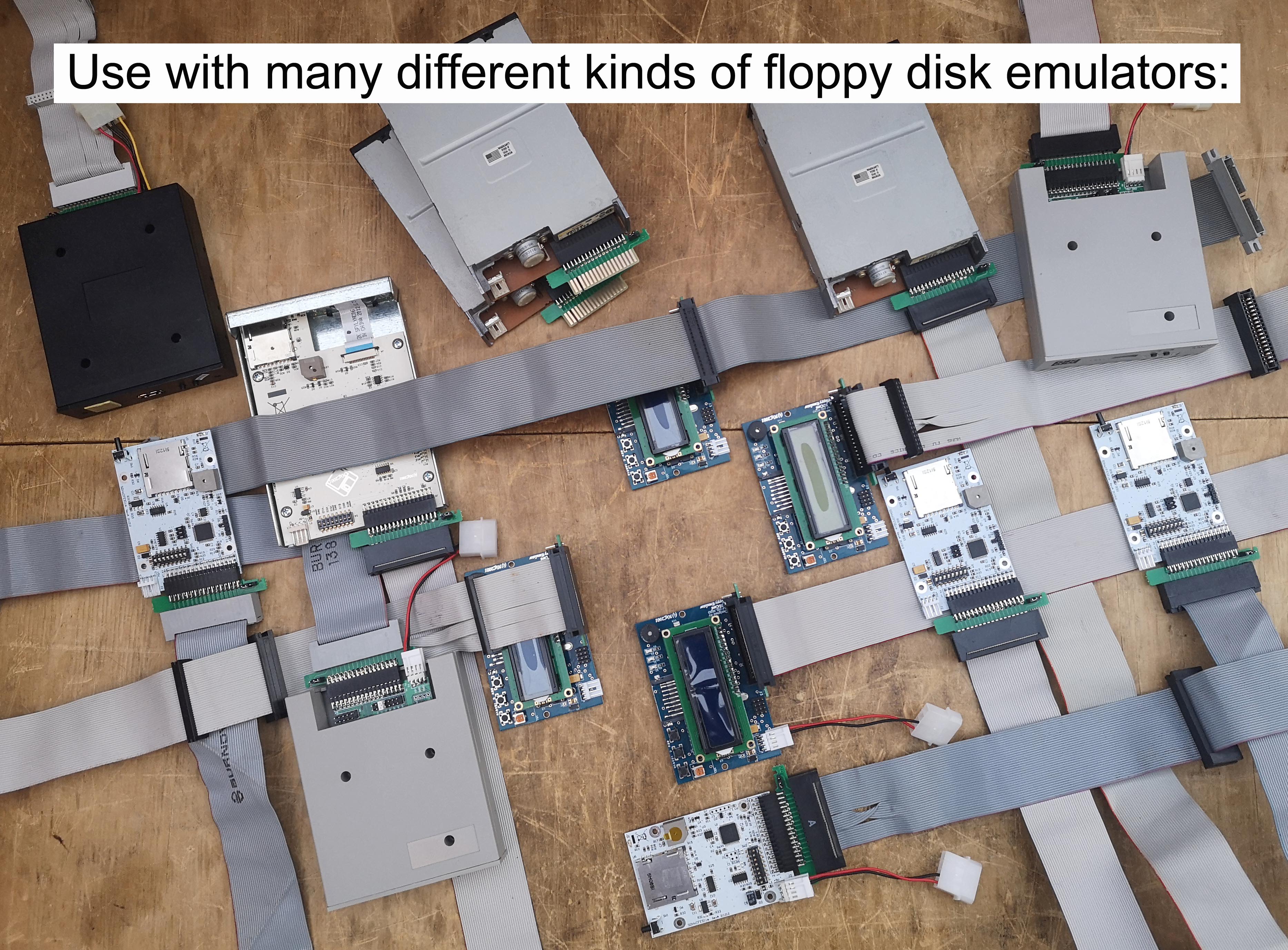
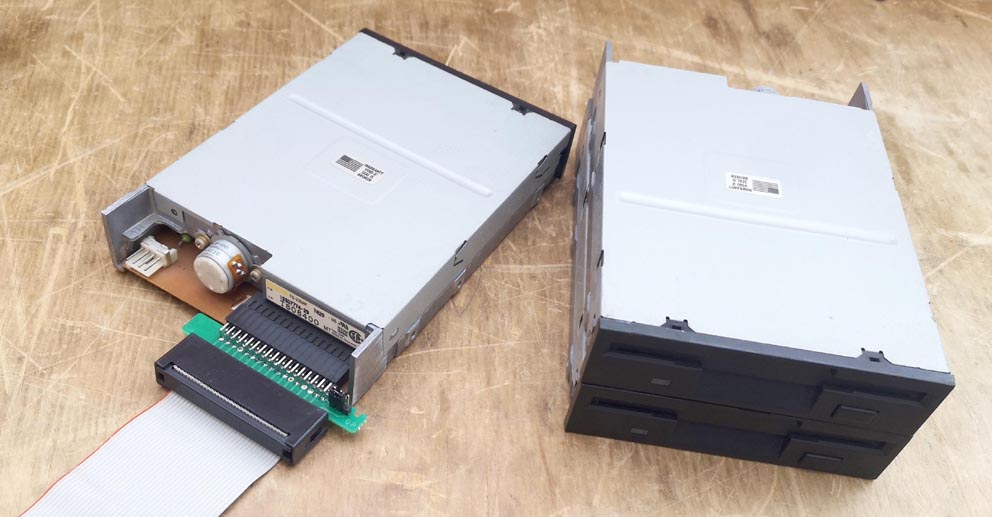
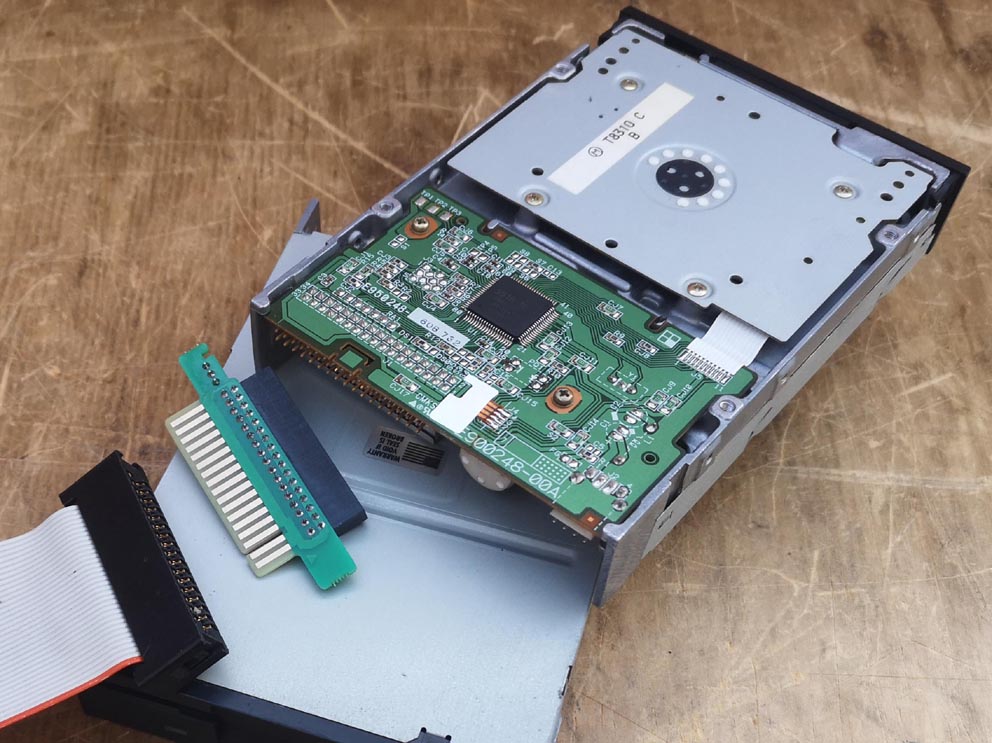
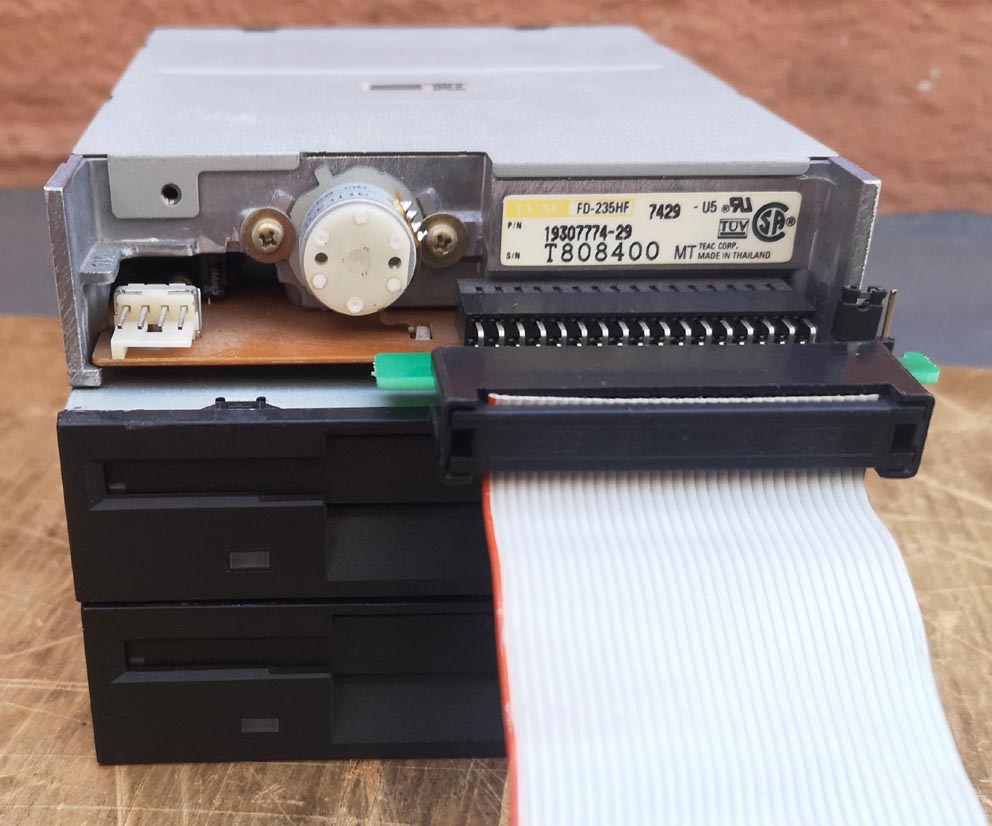
34-pin dual row to 34-pin edge card adapters were supplied with some models of 3.5" floppy drives when those first came out, such as the famous TEAC FD-235 floppy drives that you can see me working with in the photos here, because all existing PC cables were for edge card 5.25" floppy drives (from Shugart 400 to Panasonic JU-475 and everything in between). This is that type of adapter. It's not for experimentation and rewiring several times. And it will not damage the hardware due to ill-fitting connectors and needs no soldering of connectors, traces, jumpers, resistors, and no scratching soldermask off and attempting to put hobby solder on top of bare copper, then trying to clean that mess of flux off after that's done.
At least two of those "maker" guys seem like very nice people and I do not wish to characterize them uncharitably, and one of them apparently has a lot of knowledge of interfacing antique floppy drives, and one is a friend of a friend, but neither knows anything about designing circuit boards and neither knows anything about manufacturing circuit boards, and using that crap could damage your hardware in some cases.
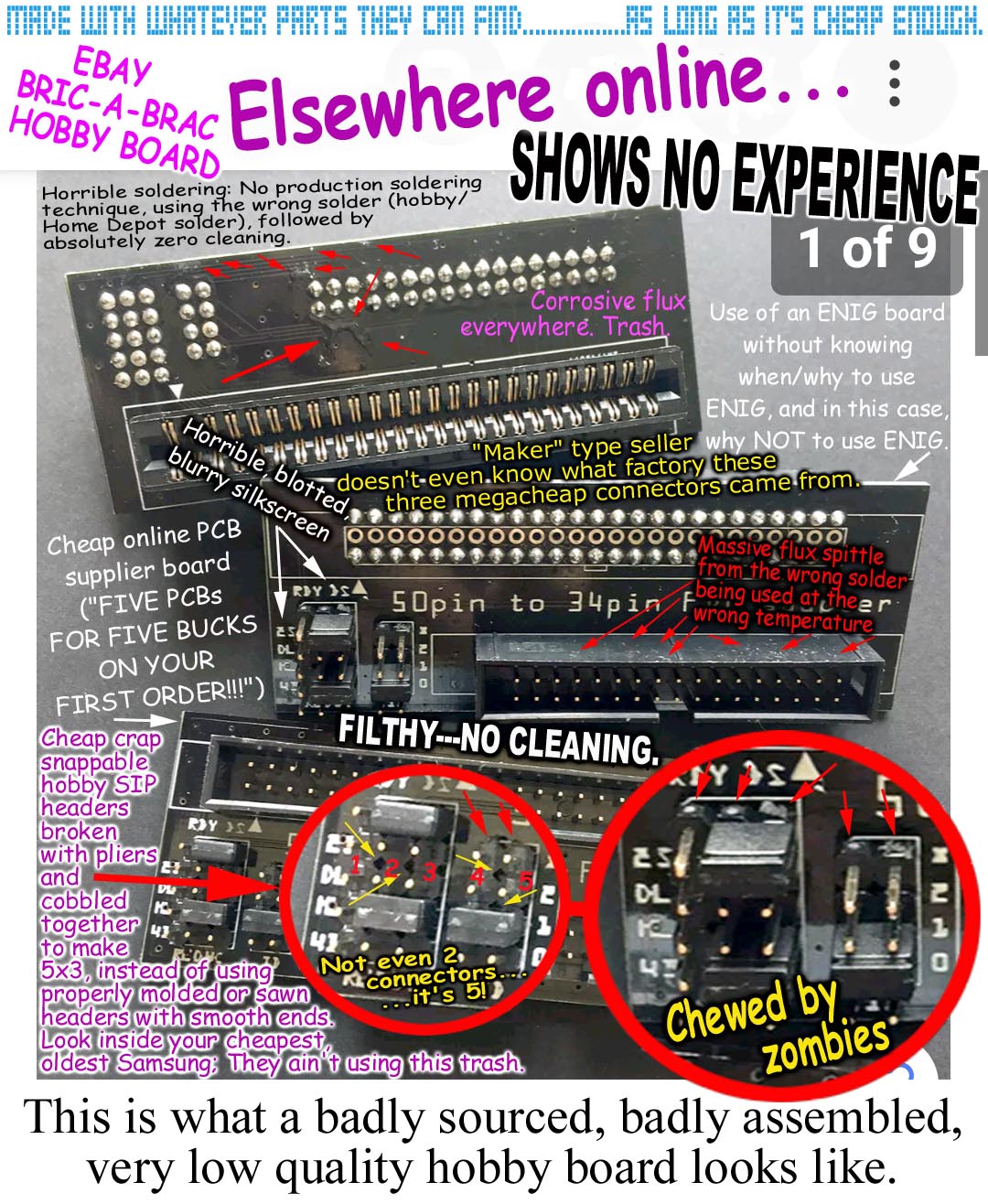
One of those...I don't even know how to start trying to describe this trash.
Scratch and sniff? It has solder mask over everything including all of the intended edge card connections, and you have to use a razor to scratch the solder mask off any connection pins that you intend to use, which, duh, is ALL OF THEM in 99.5% of applications, leaving an absolutely lovely connection surface after you've ground it down with the razor blade. It's also not gold, but rather just bare scratched up copper. That's a new one. Also his first AND last product of a lifetime. Whatever...
That one is very hard to use and will prove to be very unreliable. If cheap lead solder on edge card connections were a reliable connection surface, don't you think all the manufacturers of connectors and drives would have done it that way instead of paying for gold plating?!?!?. Another one sells at a very, very high price, supposedly commanding a price premium, but for no known reason. And it's also made wrong, like all the others.
Synhouse has absolutely mastered all types of printed circuit board assemblies, with an unusual specialty in 1970s and 1980s circuit boards. Nearly all the other guys are doing this one thing (floppy adapter) as their lifetime first project and it really shows. While there might be a feel good moment to be had clapping for the slow kid, this is just pathetic.
What they're doing is not how edge card connector boards are done. Anyone comparing this new eBay maker crap to any PCI or ISA card they have going back 45 years will see, unless they know as little about the hardware as these chimps trying to manufacture that hardware now. Then they're using stupid garbage mail order quick/cheap PCB vendors that advertise how many boards you get for a buck with your first order and don't even have the capabilities that Synhouse requires on the majority of boards made. And they're too ignorant of printed circuit boards to even know that.
On those, the sellers and the buyers are equally ignorant of these details, which is a very sad state of affairs, not just for the buyers not even knowing how to buy the good stuff, but showing that the sellers are as ignorant as the consumers about the production of these types of items.
Another Synhouse item was manufactured just because the history had shown that the customers don't know anything about quality or detail and just want the cheap one no matter what. That was after Synhouse was being scooped by being undersold with a very, very low quality board, so I countered and made the same thing they were doing on the same lower quality rung, just better on every point for all the reasons described below. Apparently the other seller challenging Synhouse and then crushed by Synhouse didn't realize that the price advantage belongs to Synhouse, as well as the quality and detail advantage which has always belonged to Synhouse. The Synhouse offerings are being broadened to sell directly against other products, to help pay for the existing operations that include this wonderful manufacturing machine, after five harsh years of price increases on almost everything. If Synhouse sees that a good number of people are regularly paying money for low quality boards from other sellers just because they are cheap, Synhouse will make it even cheaper, plus better on every point usually, then come in and effortlessly take that money away. No one can compete with Synhouse PCBAs on price or on quality/detail. If Synhouse is left alone and the only one producing an item (which is or at least WAS the case 90% of the time) it's going to be at the highest imaginable level of quality/detail. But if someone sees that and does a "me too" product to get that money away from Synhouse (for one example, the first Synhouse 34-pin edge card adapter like this one in 2019, for another example the Synhouse power supply upgrade for the Yamaha TX816 synthesizer rack, many, many attempts to copy that one, some actually contacting Synhouse trying to weasel out information about it), I will E A S I L Y counter with a similar lower grade of item that is even lower priced yet, and STILL better on almost every point (for one example the Synhouse service extender card that came out to counter someone underselling the correct part with a VASTLY lower quality board, so Synhouse made SIX SQUARE METERS of PCBs of a higher quality than their cheap one, spun the factory into production for a few days, and flooded the market with them for a significantly lower price, resulting in a total TKO of that other one).
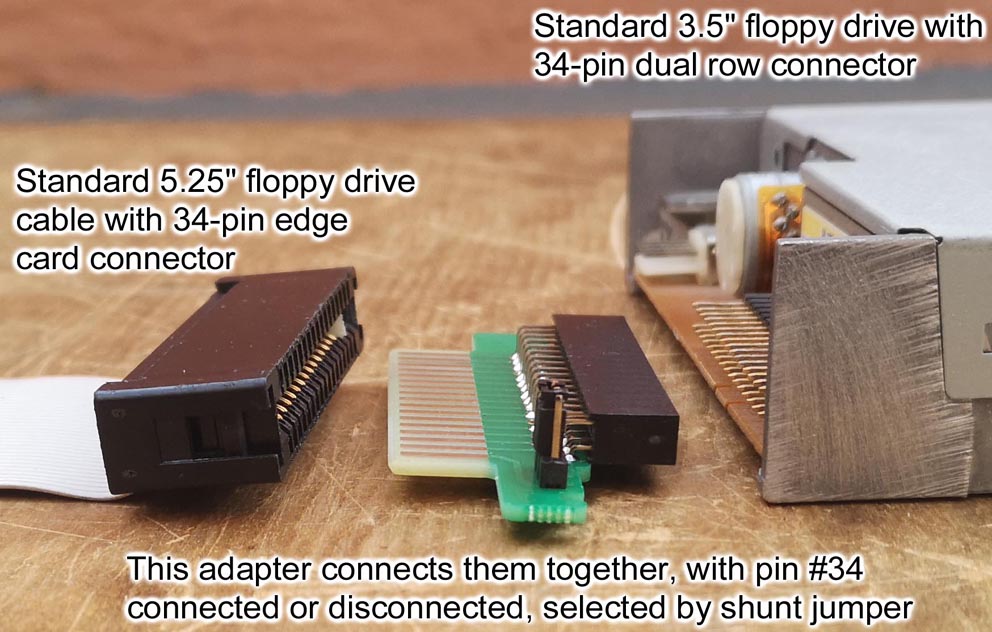
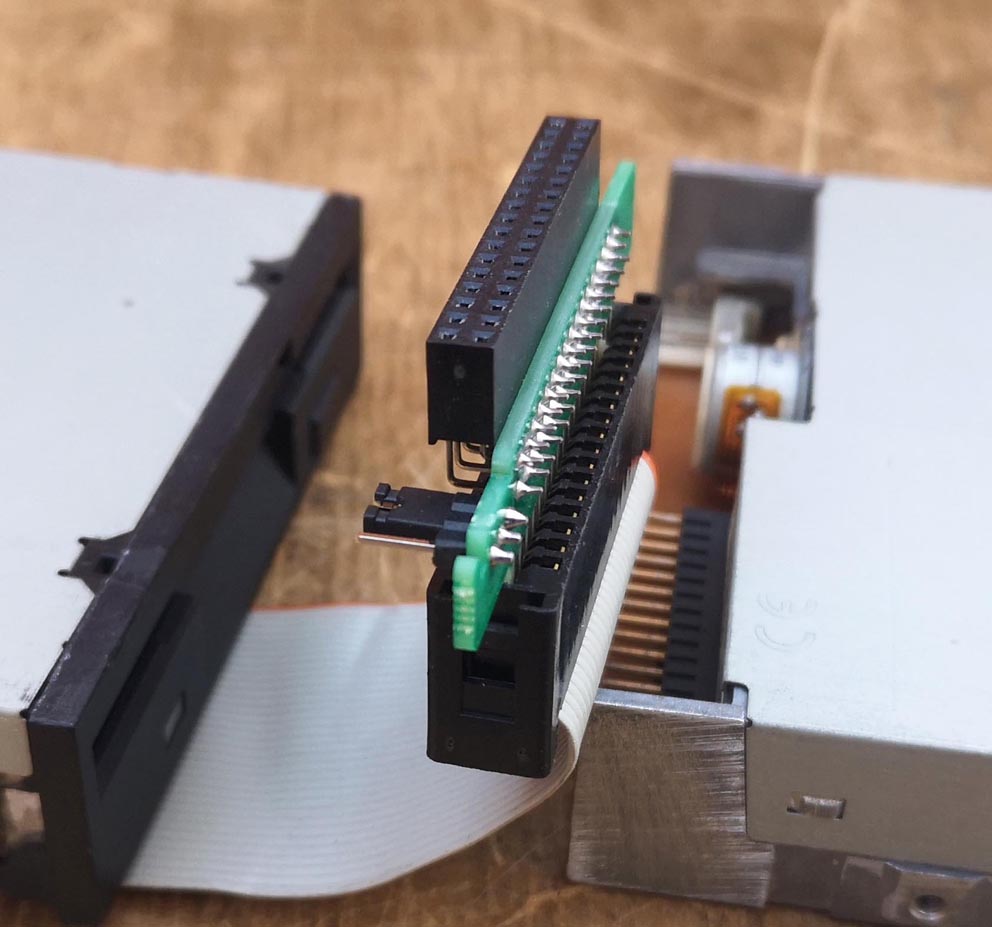
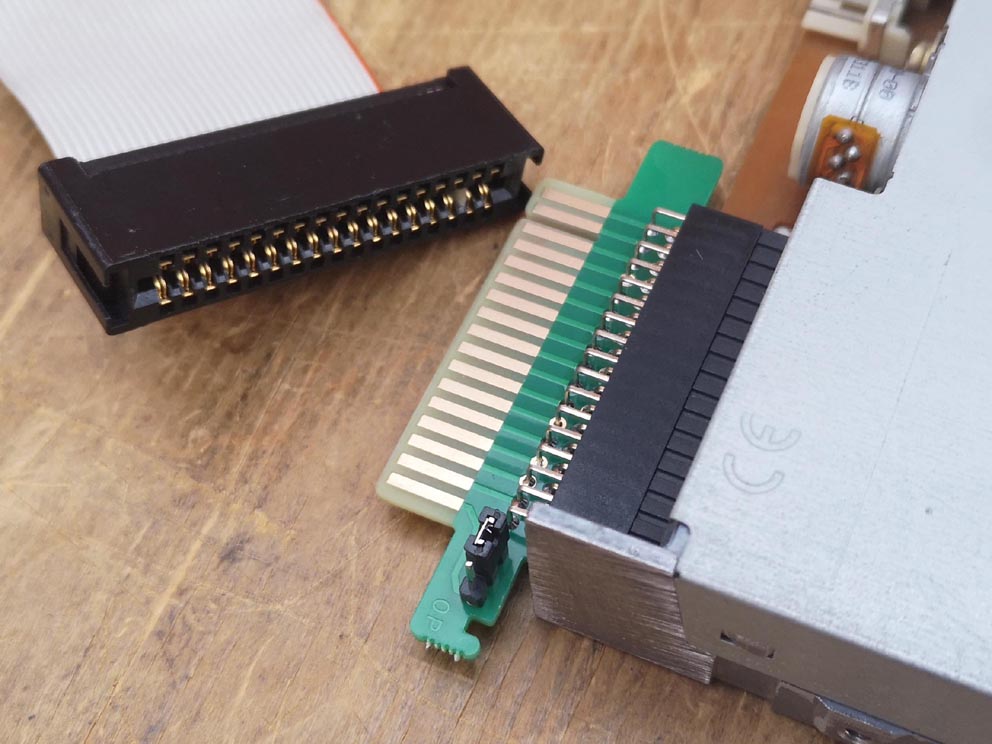
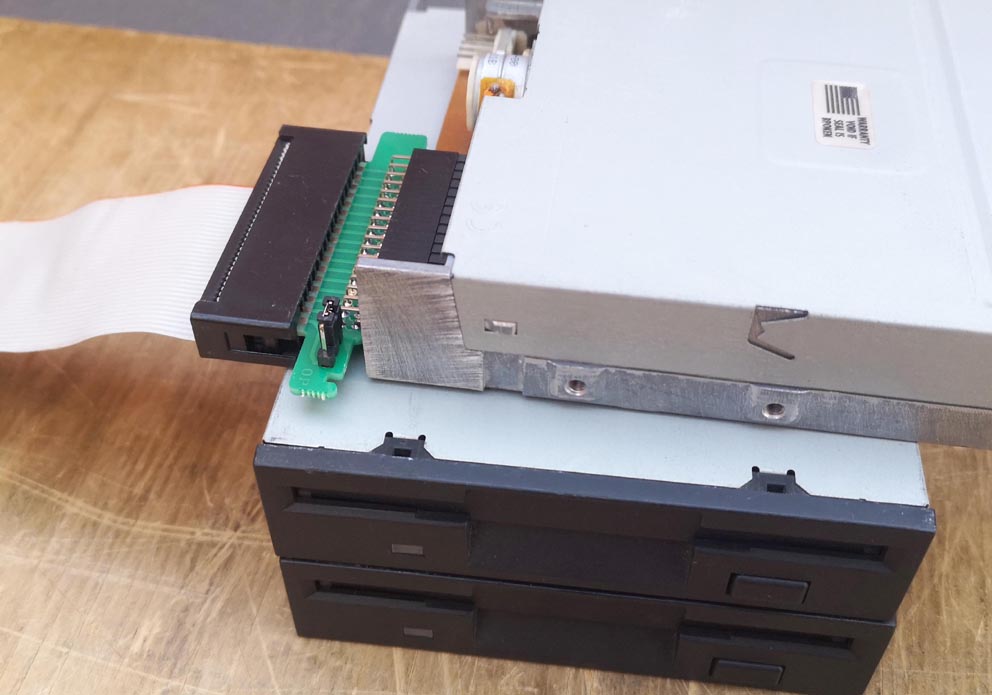
Please see the photos, the specific application photos shown there should explain what this adapter is and how it is applied. The eBay video shows it as well, but another, longer video "5.25"--3.5" Floppy Drive Emulator Adapter 34-pin Edge Card Expertly Manufactured by Synhouse" is on the Synclav com channel as well.
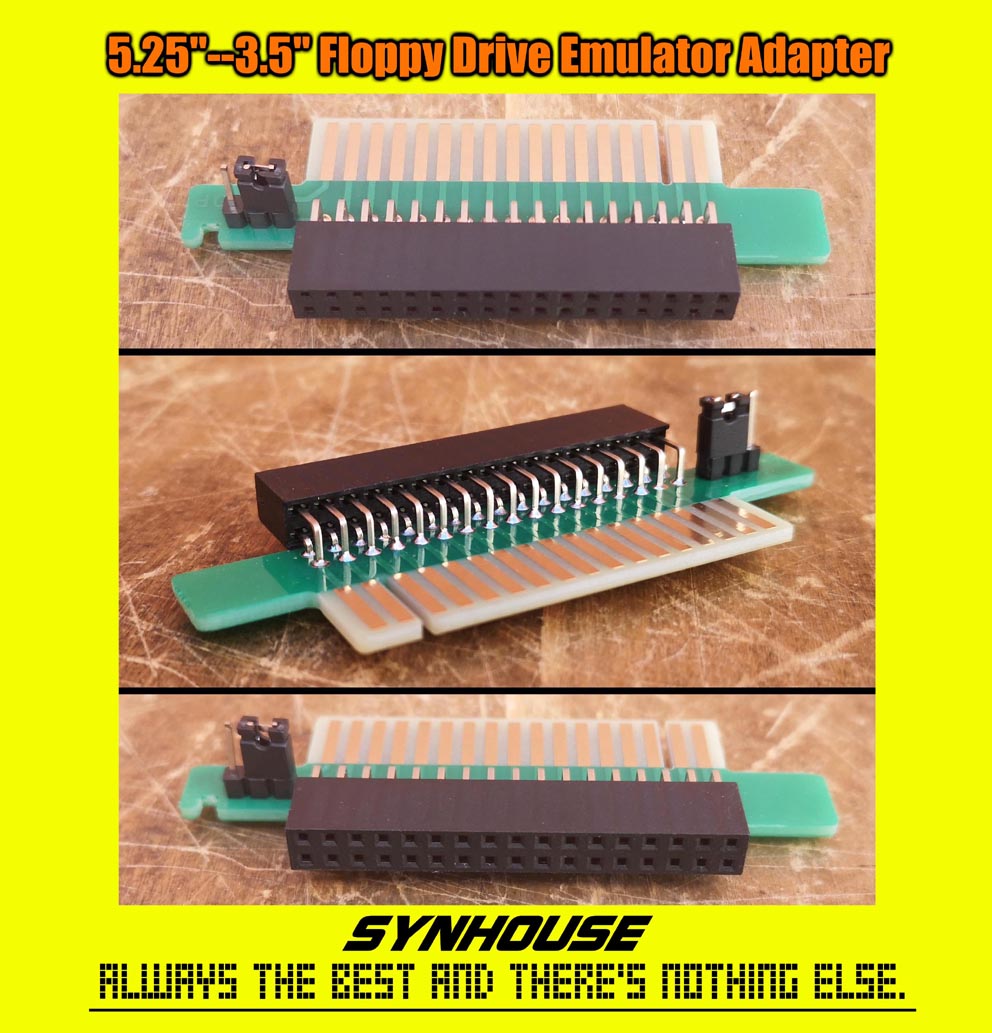
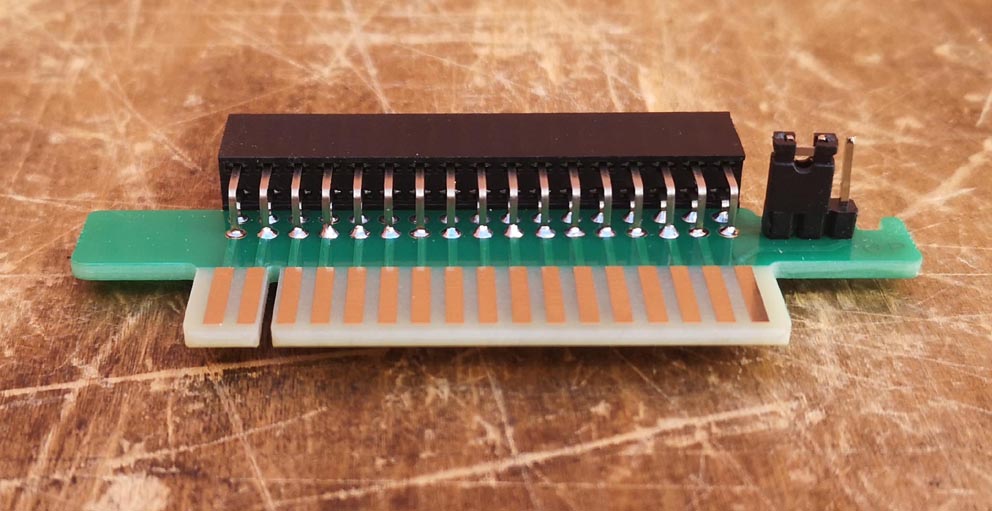
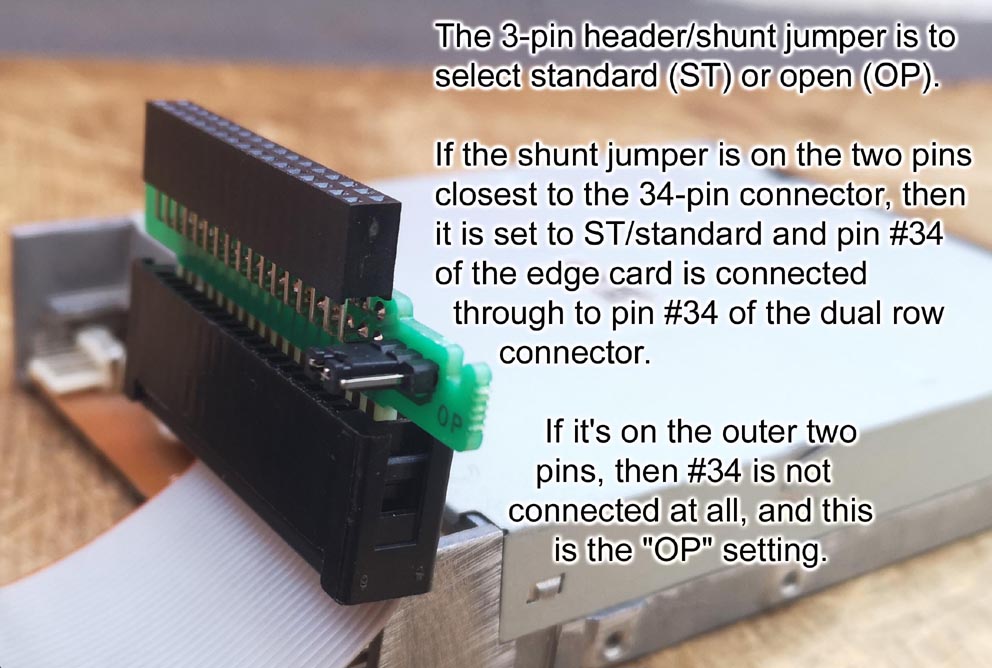
This is the same circuit as most (but not all) of the free 5.25"--3.5" adapters that came with various $100 floppy drives 30 years ago, and has the jumper that allows you to connect pin 34 straight through or disconnect pin 34. All other pins, 1-33 are wired straight through.
Amazing how many people write to ask "What are the jumpers in the picture for?" when it's both in the text right above this line and shown noted in the photos as well. ADD is a terrible thing.
If you need another application for rare vintage computer applications that were never intended (putting a flash floppy emulator on a Amiga, Commodore, TRS-80, etc., putting 3.5" drives in place of 5.25" drives [that was a thing 10-20 years ago before floppy emulators became common]), you could solder mods on this one and cut traces, but honestly it would be better to buy one of those other two very cheap ones on eBay.
This one is best suited to 98% of what people are doing today, putting flash floppy disk emulators (Gotek, HxC, etc.) onto the existing cables in their 5.25" type machine (E-mu Systems Emulator, Emulator II, Kaypro, etc.).
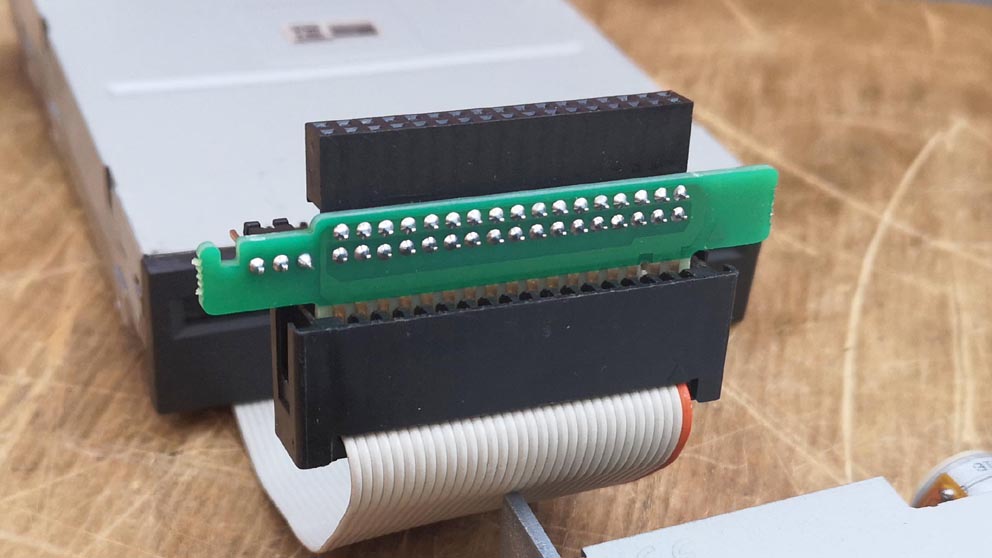
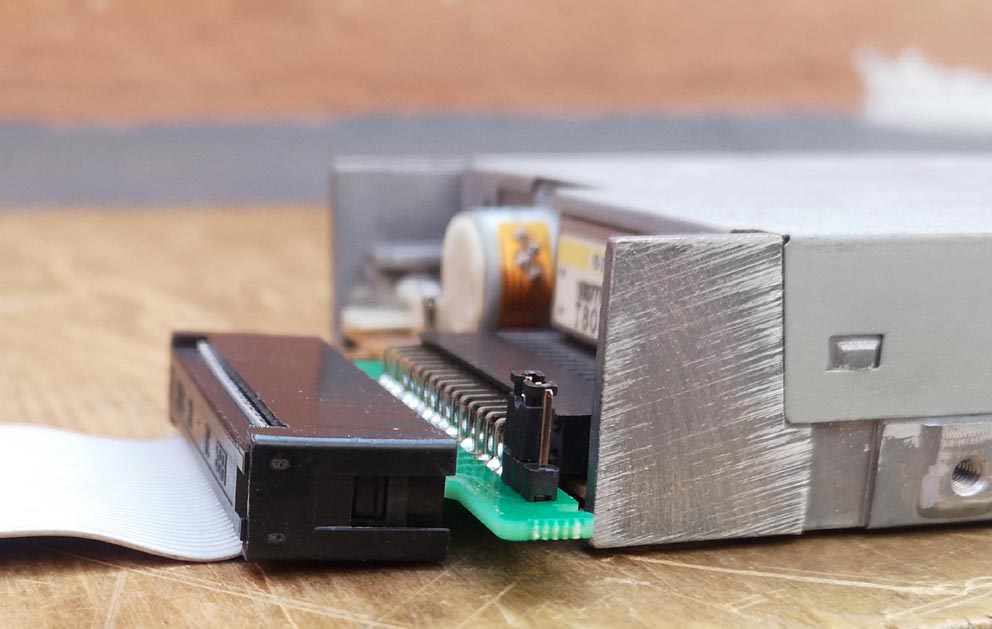
The photos show the absolute mastery of the printed circuit board design, sourcing, assembly, and cleaning that Synhouse has and no one else in electronic music or computer hobby boards does. No one.
Some are crucial details that I won't go into because it behooves me to watch idiots try to compete with me when they don't even know how to make what they're trying to make as their first project ever, and embarrassing themselves year after year by making the same wrong design and assembly. It's a lot funnier if I drop that safe on their head in retrospect years later.
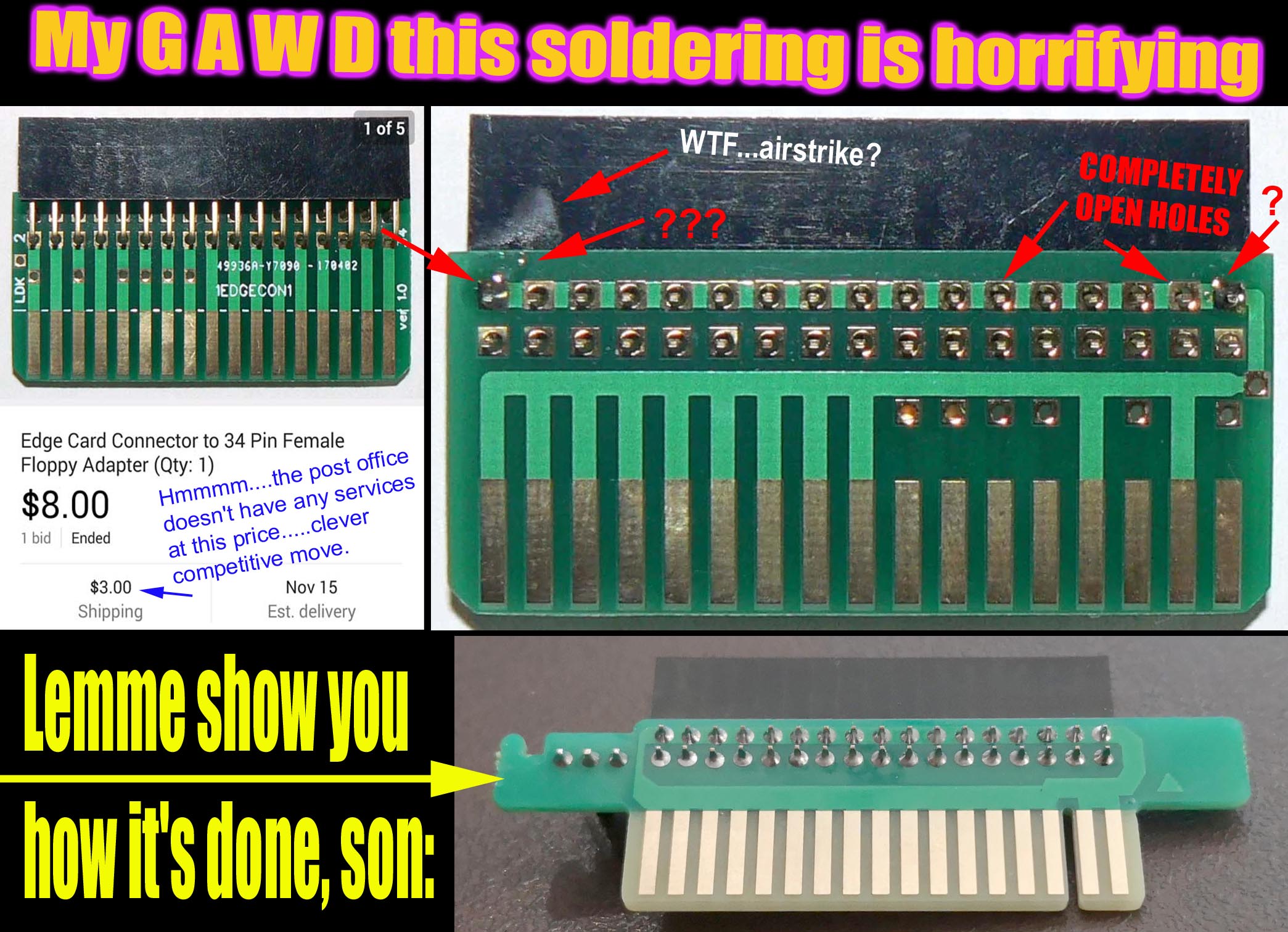
But some are smaller details, really just niceties, but it makes a very strong impression altogether. For example all the solder joints you see here. This is actual production soldering. The overwhelming majority of Synhouse circuit board assemblies are done with production wave soldering, but even the occasional hand soldering is production soldering. It's not some dude doing tiring soldering work (lingering too long on the same joint and trying to smooth it out and touch it up, that's not how the girls on the real production line do it, when they do it it looks like they are icing a cake, their hand moves faster across the board than my eyes can understand what they're doing. I've been soldering since age seven in the 1970s, I still do it daily 50 years later, and any one of them solder better than I do.
I see these so-called handmade boards sold all over the place by other little guys, and the workmanship is very poor. "Handmade" is not how good soldering is done. It's not good for the boards, it's not clean, and it's not good for the components. So those guys are at it in the nighttime at the kitchen table after getting off work at the bus factory. This one you see for sale here in the Synhouse eBay is soldered by people who have actually made a career of soldering products on contract for other companies, it's production soldering, it's done much much more quickly, does not have the same tiring effect that you see on the resulting solder joints, and for example in the case of this particular board, you can't really tell how it's soldered because it's done so well, it could be wave soldering (these were panelized for wave soldering) or it could be hand soldering, this is masterful soldering.
Furthermore it has what no one else does, which is called C L E A N I N G. This is easy for idiots to overlook, because they come and go in about 9 months, but a board that's not properly cleaned looks pretty nasty 2 years, 5 years, 10 years, 20 years, or 25 years later. And there's only one person involved in this conversation who can point to products they made 26 years ago that are still in production today and still in use out there in 43 countries around the world today, and that's me. The most recent order as of this minute was from Thailand.
Solder flux is highly acidic and corrosive, that's the whole point, it cleans the tarnished oxidized skin off of the soldering surfaces of the components and the circuit boards at the instant of soldering, but without proper cleaning afterward, the flux, even if it's not noticeable or in fact almost invisible, will bloom into a corrosive gas and start eating the plating off the connectors, eating the copper traces and plating, delaminating the boards, etc. etc..
The worst of it seen so far was one competitor's board that was a four-layer PCB that literally self-destructed in many if not most cases, maybe 50 pieces were made and 10-25 of them were bad within the first 10 years. Nearly all of them are bad now 25 years later, and he's been out of business almost 22 years now. The connecting areas between the traces on the inner layers were corroded by the excessive flux that came from using the wrong kind of solder in the first place and using no cleaning at all. Those are broken traces that can't be replaced or repaired because you can't even see them. The boards are toast.
Then, really breaking it down, Synhouse purchases each of the components you see here directly from the factories in a face-to-face transaction that does not involve mail order or the internet. Every single one of the other guys is buying components from a trading company that is buying components from a trading company, and even those first two trading companies don't know the location of the actual factory producing the goods, as they are only buying the ones that happen to be cheapest in the market at any given moment (goes by daily spot pricing). And none of these clowns even knows the address where their PCBs are made. Meaning that they are not stopping by and complaining about details or quality problems on a regular basis to make it as good as it could possibly be within the specified price range. These are people that are buying from RS in Europe, Jameco in America, or sourcing from China on platforms like this one and the other one with express in the name. Each one of whom will switch suppliers twice a month just to save 0.5% on the cost. The trial order of a part just to see how good it is before making the real order gets parts from one factory supplier, and the production order a month and a half later gets parts from a completely different company, and the second order months later gets parts from yet a third factory , and half of these guys might not even know that.
There is a huge quality advantage in everything sourced by Synhouse. I invite you to look at the new Synhouse SCSI enclosure 50-pin Centronics cable sets, listed right here in the Synhouse eBay. You might have seen a few of them sold here on eBay, not more than 20 or 25, right before the world shut down in 2019. The production was finally back in 2024 but it involved so many steps that it took a while to get done. Others don't even have access to those connector factories, they buy inferior connectors from trading companies who buy them from other trading companies who buy them from other trading companies, and they are paying too much and getting too little.
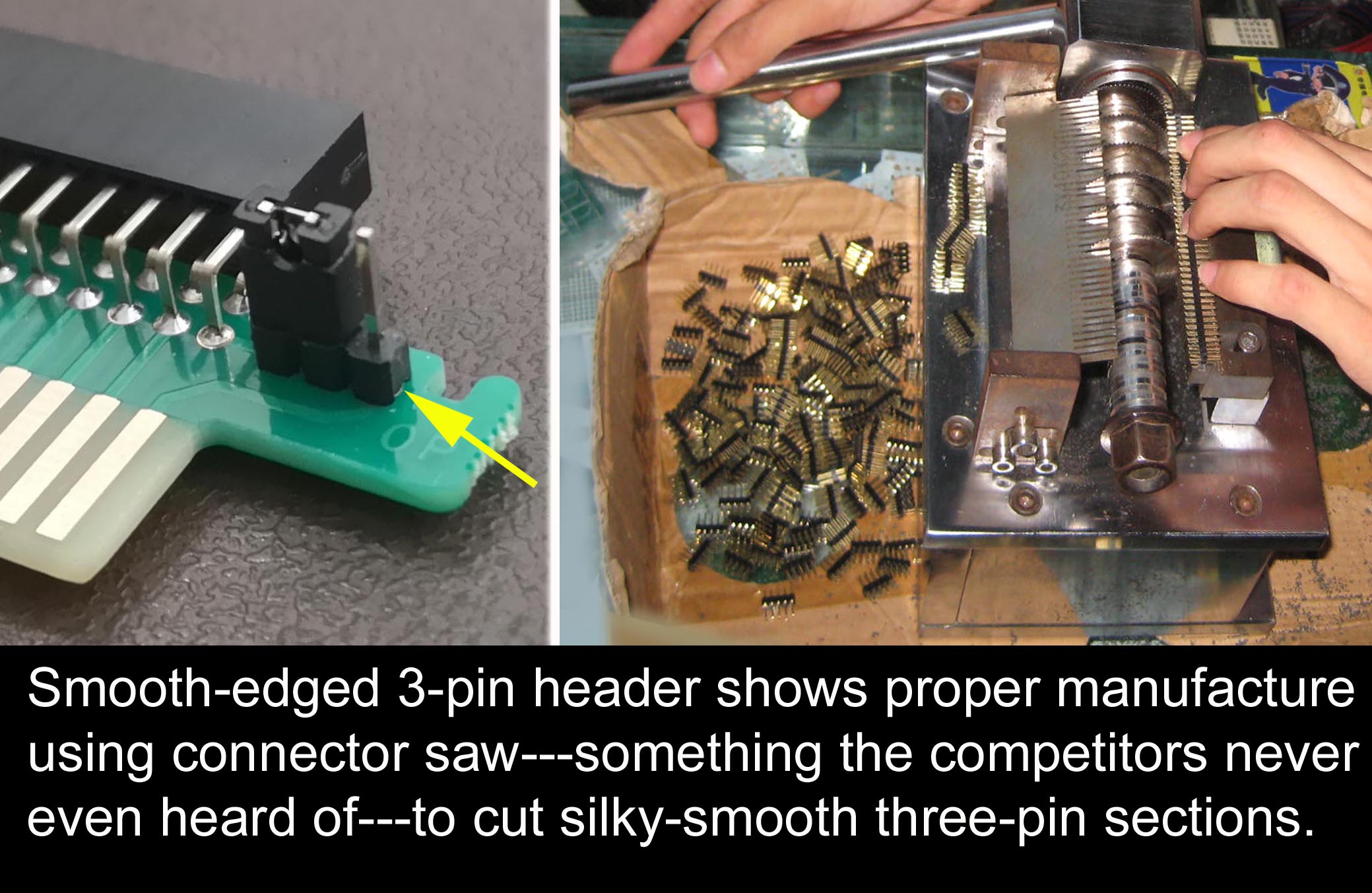
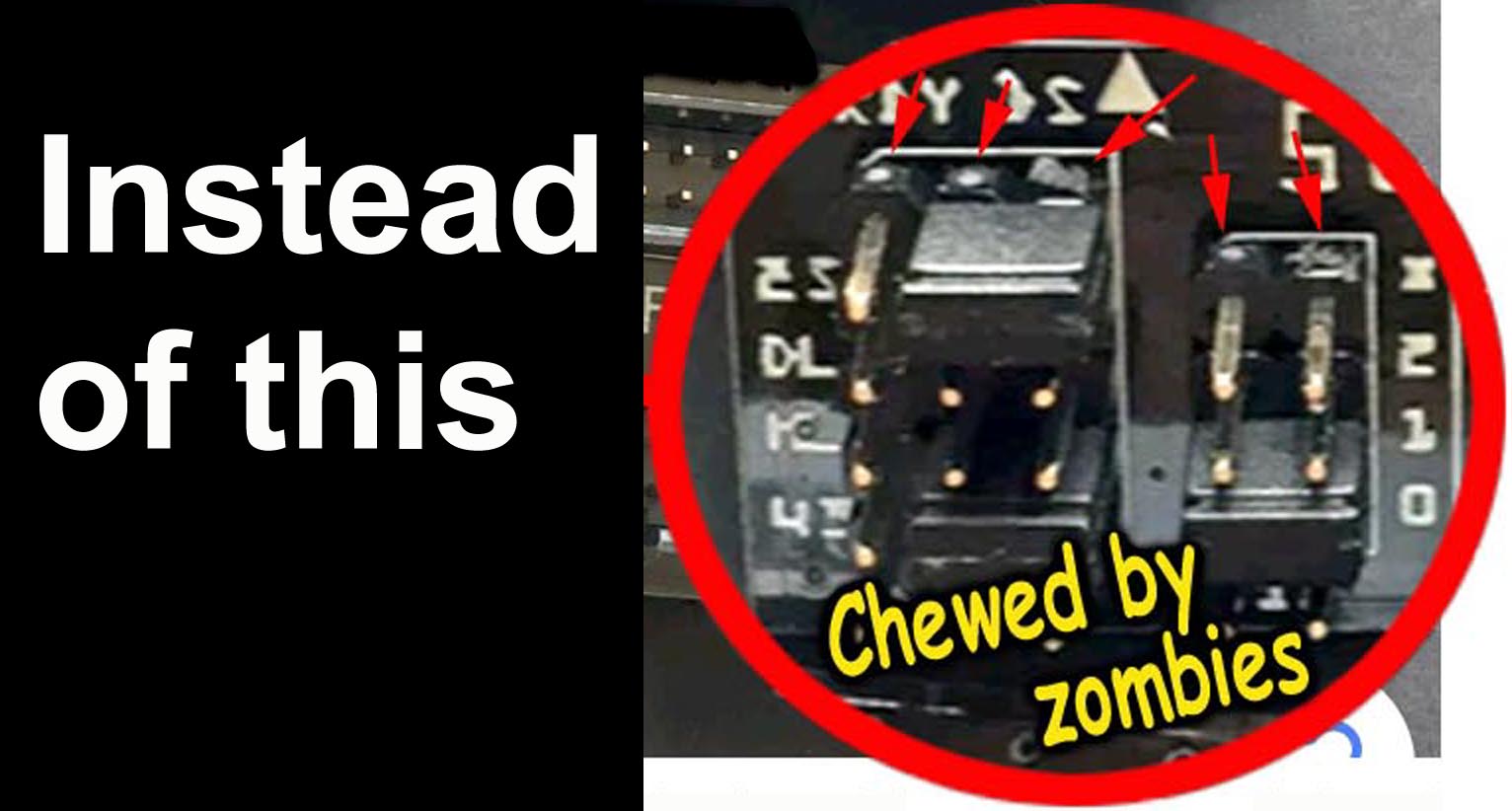
One detail here is that the 3-pin header is different between the Synhouse and every other maker of these type of adapters and on the flash floppy emulators that Synhouse manufactures as well. And again, those making them, and those buying them, don't even know the difference and don't even know to look. These are commonly referred to as snappable headers. Which is that they come in a row of 40 pins or 50 pins and they can be nipped apart at the narrow joints with wire cutters or separated just by cracking them off with small needle nose pliers. Which makes jagged broken edges that are to be expected from the "maker" chimpanzees selling their swill on eBay.
But if you look at such a jumper position on an old Apple logic board, or inside a Samsung product, you're going to notice a conspicuous lack of rough ripped jagged broken edges on the edge of the connectors. That's because they're not manufactured by chimpanzees. For example, many of the connectors used by Synhouse, such as the block of 3x4 headers on one of the floppy emulator products, are not broken with pliers off a 1x100 row and then three pieces of 1x4 put together side-by-side to make a 3x4. They are actually molded that way all as one unit at the factory. You need to be hooked up with factories in order to get this done. The mail order places I mentioned above aren't going to bother to stock those because the sales volume is going to be almost nothing.
This is similar to the Synhouse cards for New England Digital Synclaviers, if a connector has a pin missing for polarity, it's because it never existed, it was produced for Synhouse with the required pins deleted. Even New England Digital couldn't do that, their missing pins were chopped out one by one with wire cutters, as can be seen with a close inspection of dozens of different card designs.
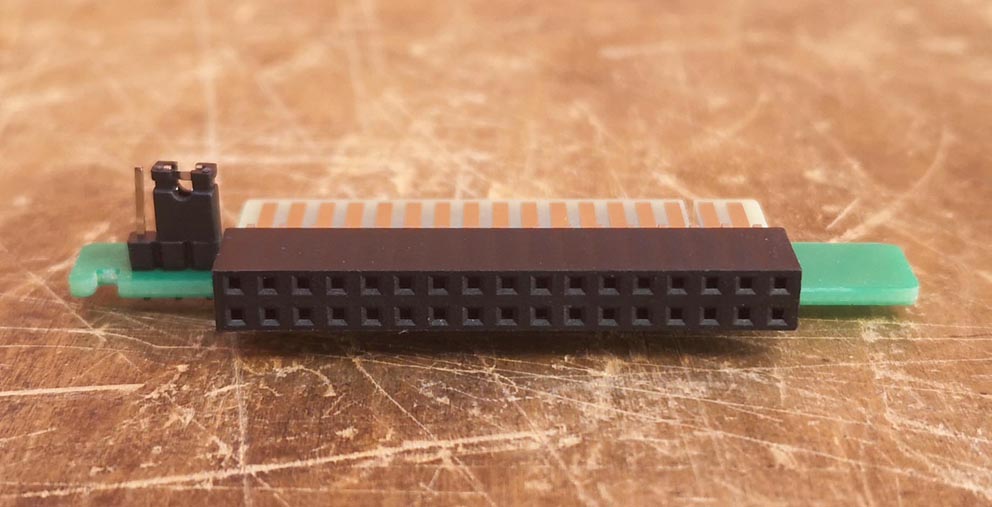
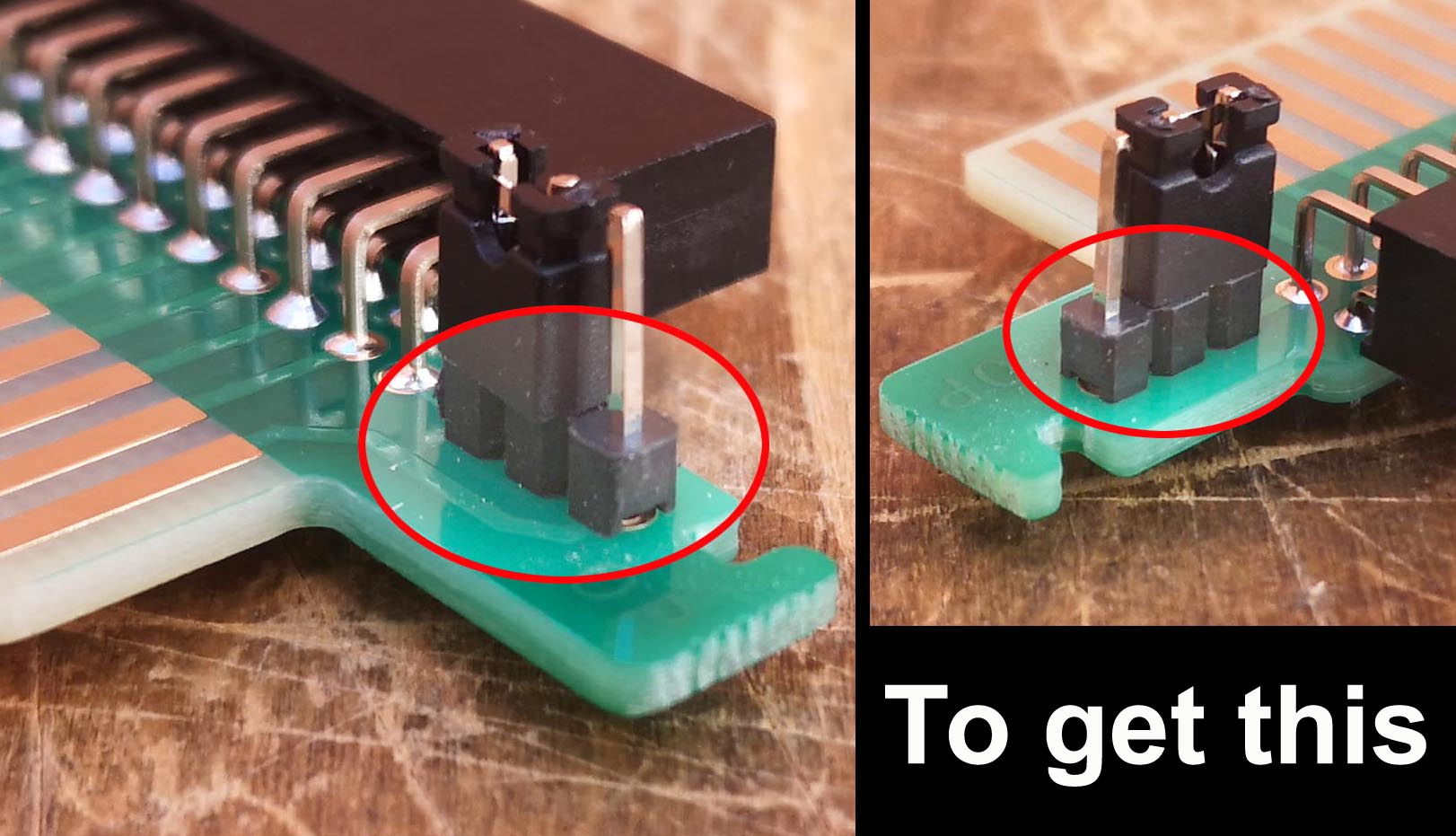
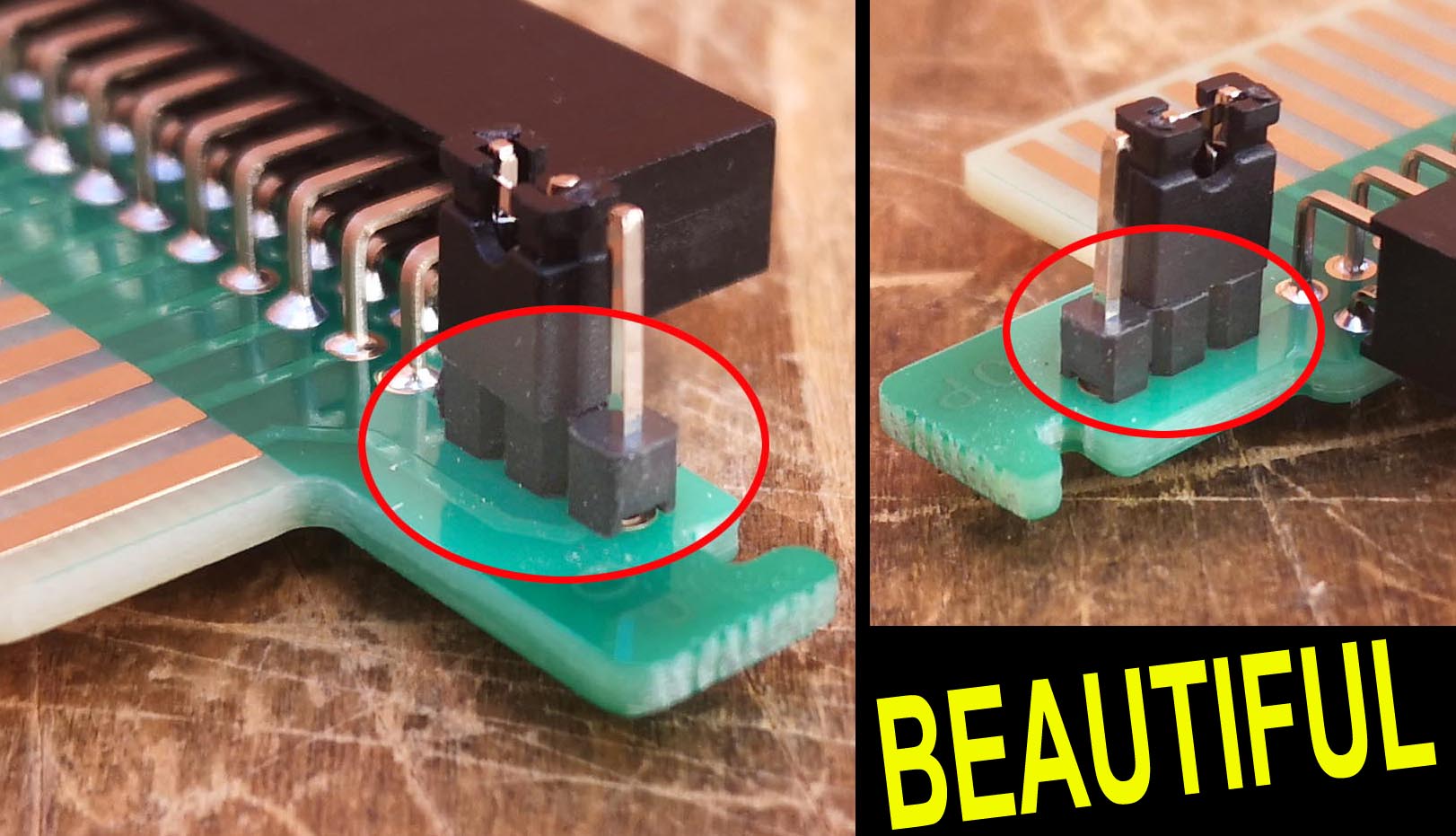
And then on something like this with the 3-pin header you can see fairly well in the photos, those are put into a special sawing machine that separates them with incredibly thin rotary saw blades, leaving an edge that is completely flat and nearly completely smooth. Instead of this. Off the top of my head I can think of three factory suppliers I've had for more than a decade that own that machine and have it at my disposal anytime I need it. Yeah, it's annoying to have to set that up and put in the spacers and correct number of saw blades in order to do it for a piddly 700-piece order for Synhouse, but I'm hooked up and they do it for me. And the ones you see here were run through the sawing machine only 5 days before this listing was started.
Also note the unusual female 90° dual row connector on this board. Those are fairly hard to find and those who find them don't know what factory they are coming from, and in every case are getting the cheapest part that the trading company they are buying from knows how to find. Conversely, Synhouse only uses the best ones I know of and buys them factory direct in a face-to-face transaction. They are gold-plated on the inside.
Seems excessive? Yes it is, and that's how everything from Synhouse is. Excessive.
Instead of "it's good enough"......said as they exit the market, having been the latest one stomped out by Synhouse.
Please note the cheap shipping, it's priced as USA and worldwide for one piece, but free on any additional pieces.
This is a VERY high quality 5.25" 34-pin male card edge to 3.5" 34-pin female dual row 34-pin edge card adapter. It is a thick CNC routed FR4 circuit board with gold plated connections on both sides of the PCB for the edge card connection, gold plated pins inside the 34-pin dual row female receptacle, gold plated pins on the 3-pin jumper header, and gold plated contacts inside the shunt jumper.
It is higher quality than the old imported ones, and vastly higher quality than the garbage that "maker" people have been making and selling on eBay. There's been at least six different sellers of those on and off eBay for the last two years I've noticed.
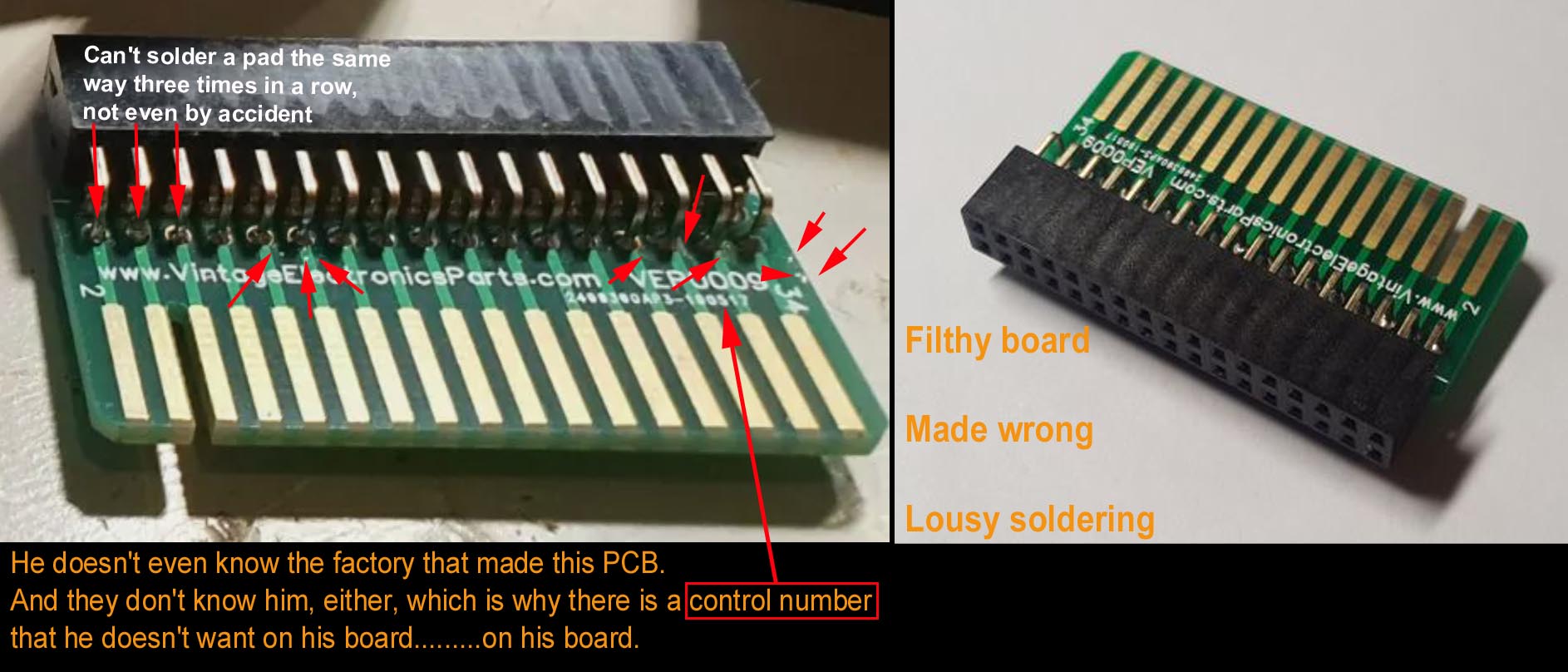
In fairness, two of them promise a lot of flexibility that will be fairly easily obtained (relative to a standard one like this) with their boards, and if you need that flexibility, you should buy those while they last instead of this one.
And I say "while they last" ..........because only Synhouse lasts.
Synhouse Multimedia Corporation started year number 26 August 1st 2024. The famous Synhouse MIDIJACK went into production June 1999 and is still in production and is still stocked in 2024. Nobody else can say that about a software-based computer controlled electronic music product with interfaces.
And Synhouse has 200 eBay listings, with a third of those designed and manufactured by Synhouse. Who else can say that?
And almost none of the 200 items in the Synhouse eBay can be bought anywhere else in the world today, on or off eBay. Who else can say that? Click on completed/sold eBay items and see who else could have completed all those deals. NO ONE.
But 95% of all floppy applications won't need or use this flexibility and every single time having to configure an entire board that can make any connection to anything isn't really any easier than just hand wiring the connections yourself without buying their dumb little kid's science project kit from them in the first place. And one of them expects you to supply your own parts (connectors, resistors, etc.) for their project. With a capital L.
34-pin dual row to 34-pin edge card adapters were supplied with some models of 3.5" floppy drives when those first came out, such as the famous TEAC FD-235 floppy drives that you can see me working with in the photos here, because all existing PC cables were for edge card 5.25" floppy drives (from Shugart 400 to Panasonic JU-475 and everything in between). This is that type of adapter. It's not for experimentation and rewiring several times. And it will not damage the hardware due to ill-fitting connectors and needs no soldering of connectors, traces, jumpers, resistors, and no scratching soldermask off and attempting to put hobby solder on top of bare copper, then trying to clean that mess of flux off after that's done.
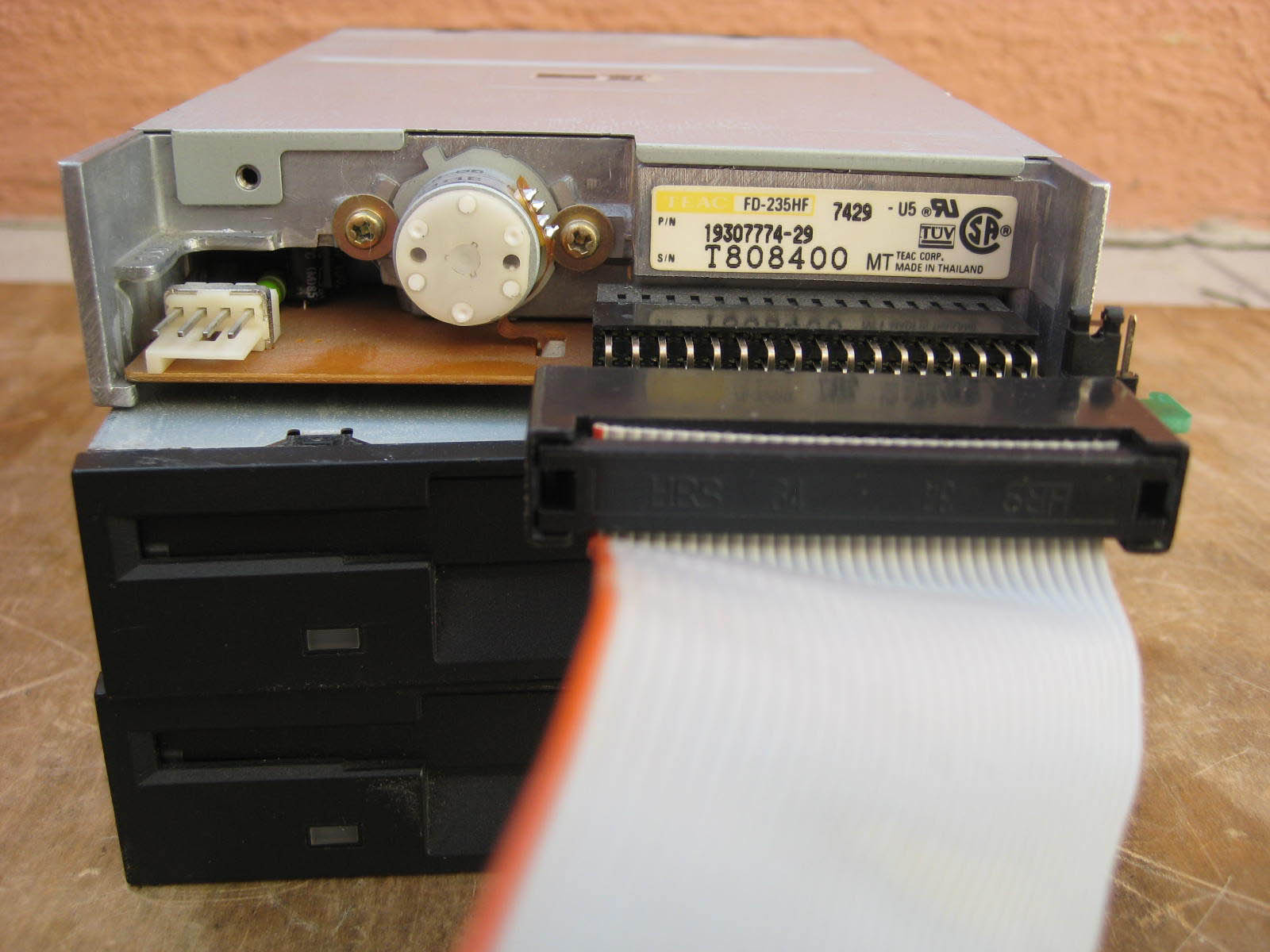
At least two of those "maker" guys seem like very nice people and I do not wish to characterize them uncharitably, and one of them apparently has a lot of knowledge of interfacing antique floppy drives, and one is a friend of a friend, but neither knows anything about designing circuit boards and neither knows anything about manufacturing circuit boards, and using that crap could damage your hardware in some cases.
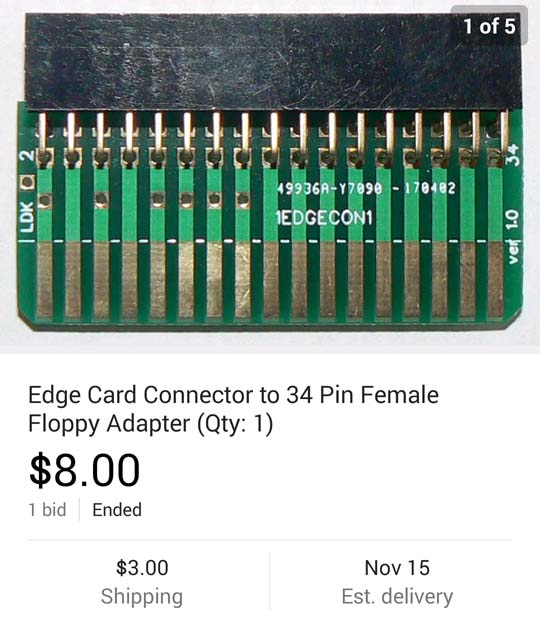
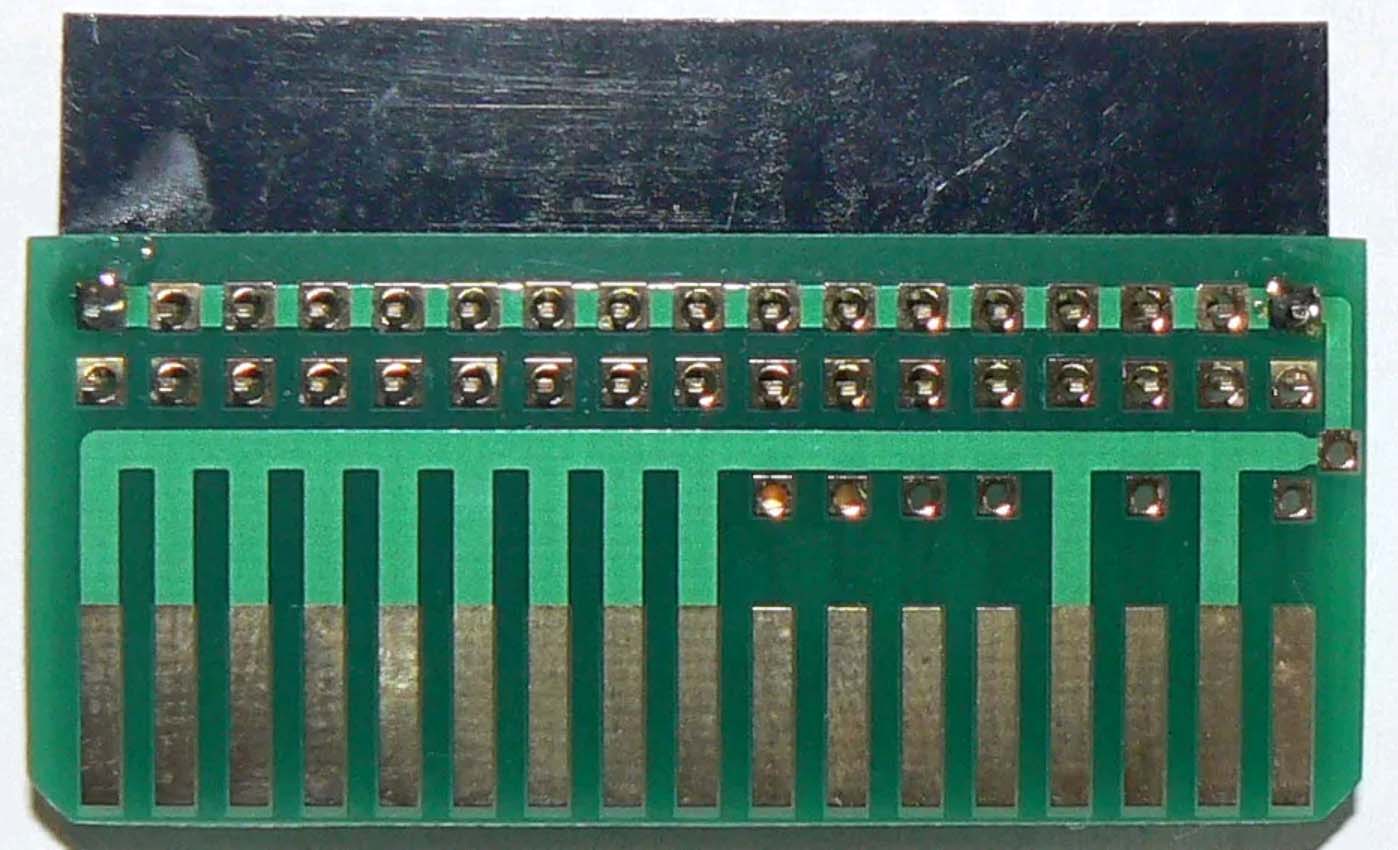
One of those...I don't even know how to start trying to describe this trash.
Scratch and sniff? It has solder mask over everything including all of the intended edge card connections, and you have to use a razor to scratch the solder mask off any connection pins that you intend to use, which, duh, is ALL OF THEM in 99.5% of applications, leaving an absolutely lovely connection surface after you've ground it down with the razor blade. It's also not gold, but rather just bare scratched up copper. That's a new one. Also his first AND last product of a lifetime. Whatever...
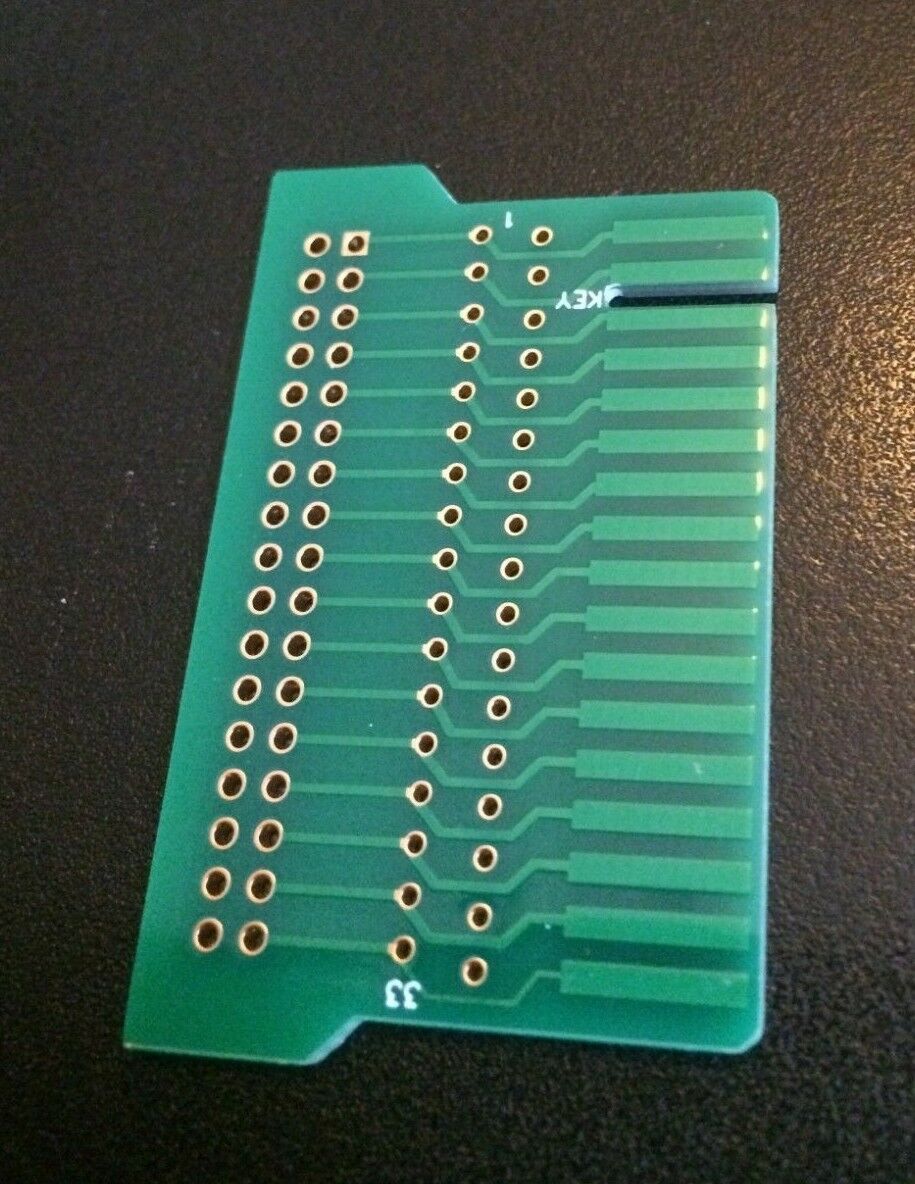
That one is very hard to use and will prove to be very unreliable. If cheap lead solder on edge card connections were a reliable connection surface, don't you think all the manufacturers of connectors and drives would have done it that way instead of paying for gold plating?!?!?. Another one sells at a very, very high price, supposedly commanding a price premium, but for no known reason. And it's also made wrong, like all the others.
Synhouse has absolutely mastered all types of printed circuit board assemblies, with an unusual specialty in 1970s and 1980s circuit boards. Nearly all the other guys are doing this one thing (floppy adapter) as their lifetime first project and it really shows. While there might be a feel good moment to be had clapping for the slow kid, this is just pathetic.
What they're doing is not how edge card connector boards are done. Anyone comparing this new eBay maker crap to any PCI or ISA card they have going back 45 years will see, unless they know as little about the hardware as these chimps trying to manufacture that hardware now. Then they're using stupid garbage mail order quick/cheap PCB vendors that advertise how many boards you get for a buck with your first order and don't even have the capabilities that Synhouse requires on the majority of boards made. And they're too ignorant of printed circuit boards to even know that.
On those, the sellers and the buyers are equally ignorant of these details, which is a very sad state of affairs, not just for the buyers not even knowing how to buy the good stuff, but showing that the sellers are as ignorant as the consumers about the production of these types of items.
Another Synhouse item was manufactured just because the history had shown that the customers don't know anything about quality or detail and just want the cheap one no matter what. That was after Synhouse was being scooped by being undersold with a very, very low quality board, so I countered and made the same thing they were doing on the same lower quality rung, just better on every point for all the reasons described below. Apparently the other seller challenging Synhouse and then crushed by Synhouse didn't realize that the price advantage belongs to Synhouse, as well as the quality and detail advantage which has always belonged to Synhouse. The Synhouse offerings are being broadened to sell directly against other products, to help pay for the existing operations that include this wonderful manufacturing machine, after five harsh years of price increases on almost everything. If Synhouse sees that a good number of people are regularly paying money for low quality boards from other sellers just because they are cheap, Synhouse will make it even cheaper, plus better on every point usually, then come in and effortlessly take that money away. No one can compete with Synhouse PCBAs on price or on quality/detail. If Synhouse is left alone and the only one producing an item (which is or at least WAS the case 90% of the time) it's going to be at the highest imaginable level of quality/detail. But if someone sees that and does a "me too" product to get that money away from Synhouse (for one example, the first Synhouse 34-pin edge card adapter like this one in 2019, for another example the Synhouse power supply upgrade for the Yamaha TX816 synthesizer rack, many, many attempts to copy that one, some actually contacting Synhouse trying to weasel out information about it), I will E A S I L Y counter with a similar lower grade of item that is even lower priced yet, and STILL better on almost every point (for one example the Synhouse service extender card that came out to counter someone underselling the correct part with a VASTLY lower quality board, so Synhouse made SIX SQUARE METERS of PCBs of a higher quality than their cheap one, spun the factory into production for a few days, and flooded the market with them for a significantly lower price, resulting in a total TKO of that other one).
Please see the photos, the specific application photos shown there should explain what this adapter is and how it is applied. The eBay video shows it as well, but another, longer video "5.25"--3.5" Floppy Drive Emulator Adapter 34-pin Edge Card Expertly Manufactured by Synhouse" is on the Synclav com channel as well.
This is the same circuit as most (but not all) of the free 5.25"--3.5" adapters that came with various $100 floppy drives 30 years ago, and has the jumper that allows you to connect pin 34 straight through or disconnect pin 34. All other pins, 1-33 are wired straight through.
Amazing how many people write to ask "What are the jumpers in the picture for?" when it's both in the text right above this line and shown noted in the photos as well. ADD is a terrible thing.
If you need another application for rare vintage computer applications that were never intended (putting a flash floppy emulator on a Amiga, Commodore, TRS-80, etc., putting 3.5" drives in place of 5.25" drives [that was a thing 10-20 years ago before floppy emulators became common]), you could solder mods on this one and cut traces, but honestly it would be better to buy one of those other two very cheap ones on eBay.
This one is best suited to 98% of what people are doing today, putting flash floppy disk emulators (Gotek, HxC, etc.) onto the existing cables in their 5.25" type machine (E-mu Systems Emulator, Emulator II, Kaypro, etc.).
The photos show the absolute mastery of the printed circuit board design, sourcing, assembly, and cleaning that Synhouse has and no one else in electronic music or computer hobby boards does. No one.
Some are crucial details that I won't go into because it behooves me to watch idiots try to compete with me when they don't even know how to make what they're trying to make as their first project ever, and embarrassing themselves year after year by making the same wrong design and assembly. It's a lot funnier if I drop that safe on their head in retrospect years later.
But some are smaller details, really just niceties, but it makes a very strong impression altogether. For example all the solder joints you see here. This is actual production soldering. The overwhelming majority of Synhouse circuit board assemblies are done with production wave soldering, but even the occasional hand soldering is production soldering. It's not some dude doing tiring soldering work (lingering too long on the same joint and trying to smooth it out and touch it up, that's not how the girls on the real production line do it, when they do it it looks like they are icing a cake, their hand moves faster across the board than my eyes can understand what they're doing. I've been soldering since age seven in the 1970s, I still do it daily 50 years later, and any one of them solder better than I do.
I see these so-called handmade boards sold all over the place by other little guys, and the workmanship is very poor. "Handmade" is not how good soldering is done. It's not good for the boards, it's not clean, and it's not good for the components. So those guys are at it in the nighttime at the kitchen table after getting off work at the bus factory. This one you see for sale here in the Synhouse eBay is soldered by people who have actually made a career of soldering products on contract for other companies, it's production soldering, it's done much much more quickly, does not have the same tiring effect that you see on the resulting solder joints, and for example in the case of this particular board, you can't really tell how it's soldered because it's done so well, it could be wave soldering (these were panelized for wave soldering) or it could be hand soldering, this is masterful soldering.
Furthermore it has what no one else does, which is called C L E A N I N G. This is easy for idiots to overlook, because they come and go in about 9 months, but a board that's not properly cleaned looks pretty nasty 2 years, 5 years, 10 years, 20 years, or 25 years later. And there's only one person involved in this conversation who can point to products they made 26 years ago that are still in production today and still in use out there in 43 countries around the world today, and that's me. The most recent order as of this minute was from Thailand.
Solder flux is highly acidic and corrosive, that's the whole point, it cleans the tarnished oxidized skin off of the soldering surfaces of the components and the circuit boards at the instant of soldering, but without proper cleaning afterward, the flux, even if it's not noticeable or in fact almost invisible, will bloom into a corrosive gas and start eating the plating off the connectors, eating the copper traces and plating, delaminating the boards, etc. etc..
The worst of it seen so far was one competitor's board that was a four-layer PCB that literally self-destructed in many if not most cases, maybe 50 pieces were made and 10-25 of them were bad within the first 10 years. Nearly all of them are bad now 25 years later, and he's been out of business almost 22 years now. The connecting areas between the traces on the inner layers were corroded by the excessive flux that came from using the wrong kind of solder in the first place and using no cleaning at all. Those are broken traces that can't be replaced or repaired because you can't even see them. The boards are toast.
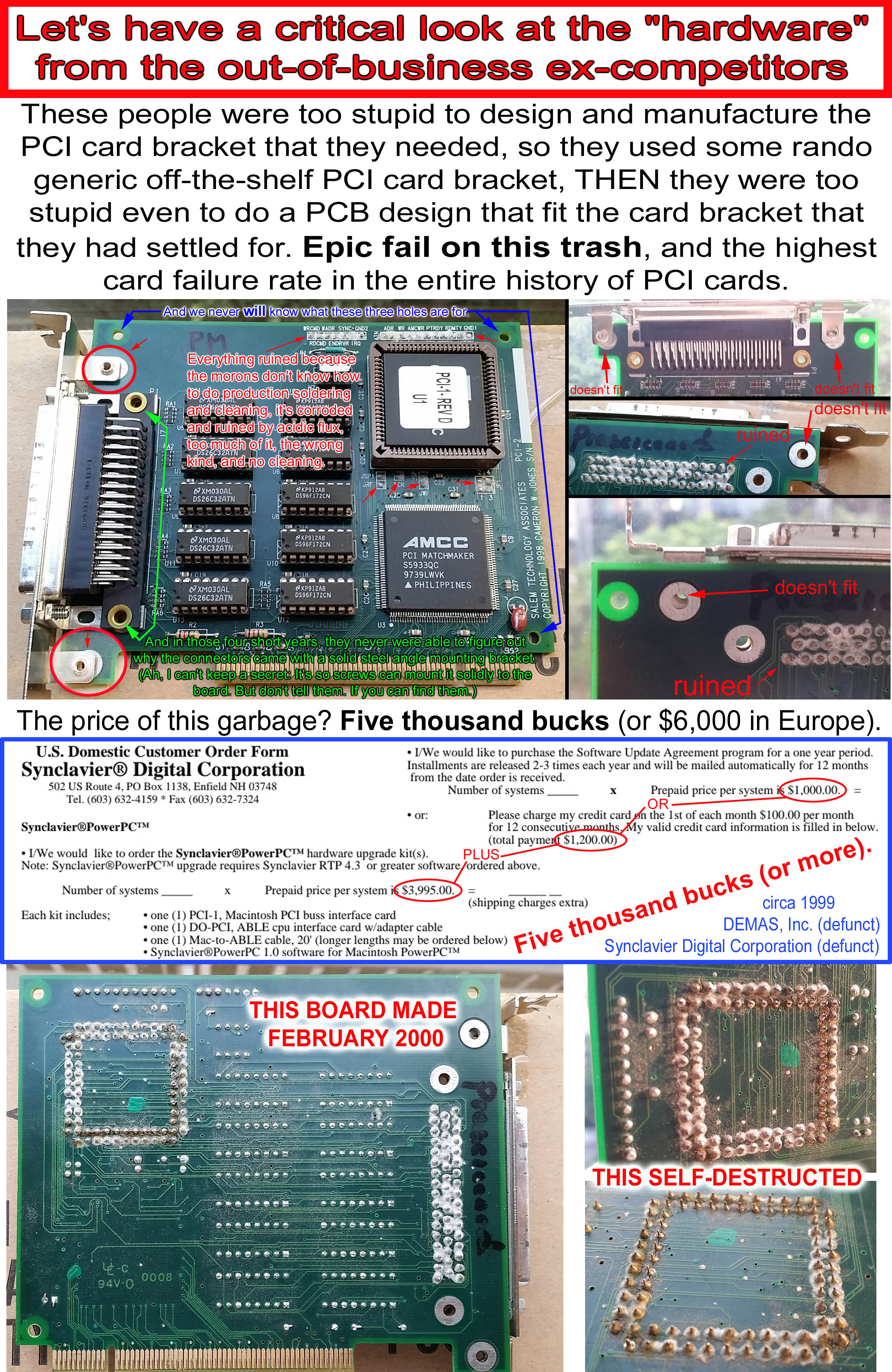
Then, really breaking it down, Synhouse purchases each of the components you see here directly from the factories in a face-to-face transaction that does not involve mail order or the internet. Every single one of the other guys is buying components from a trading company that is buying components from a trading company, and even those first two trading companies don't know the location of the actual factory producing the goods, as they are only buying the ones that happen to be cheapest in the market at any given moment (goes by daily spot pricing). And none of these clowns even knows the address where their PCBs are made. Meaning that they are not stopping by and complaining about details or quality problems on a regular basis to make it as good as it could possibly be within the specified price range. These are people that are buying from RS in Europe, Jameco in America, or sourcing from China on platforms like this one and the other one with express in the name. Each one of whom will switch suppliers twice a month just to save 0.5% on the cost. The trial order of a part just to see how good it is before making the real order gets parts from one factory supplier, and the production order a month and a half later gets parts from a completely different company, and the second order months later gets parts from yet a third factory , and half of these guys might not even know that.
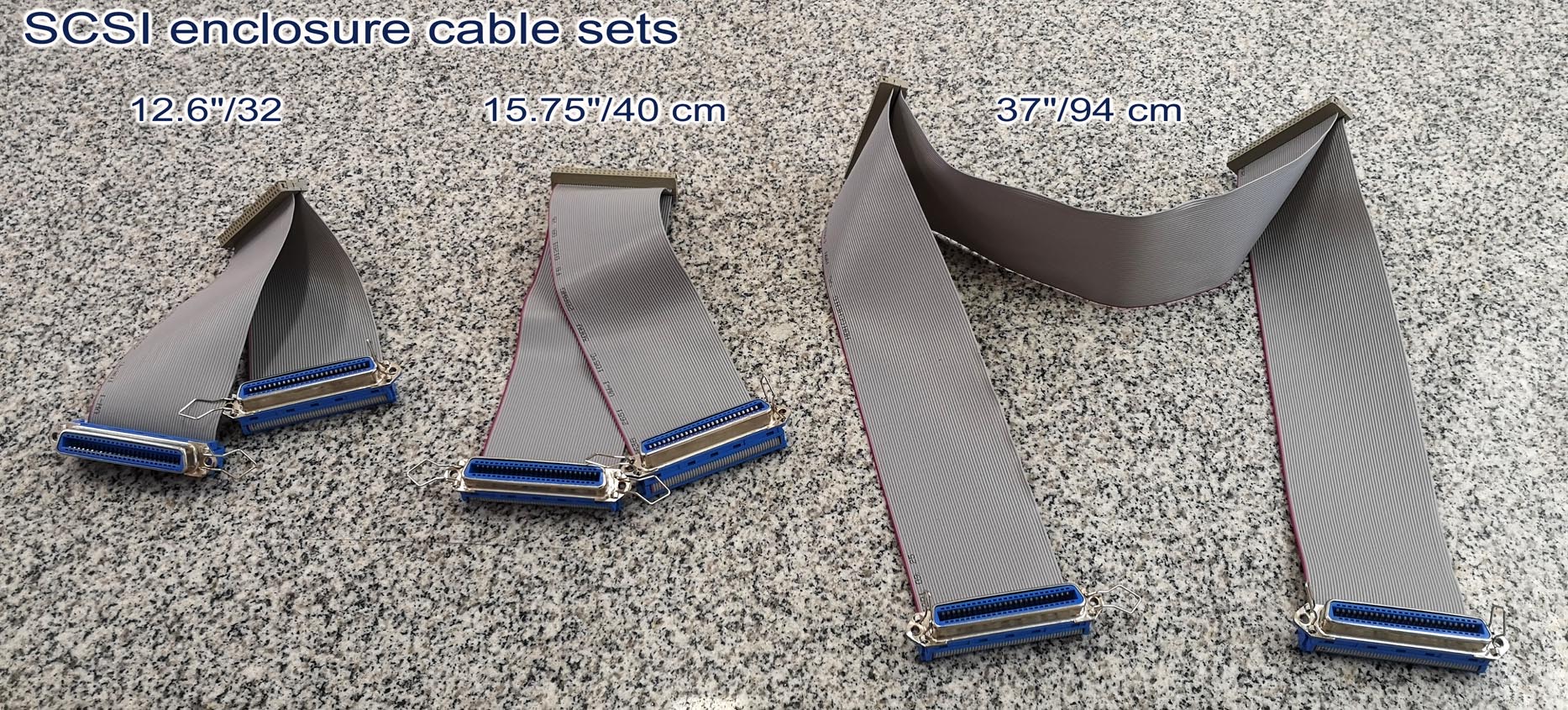
There is a huge quality advantage in everything sourced by Synhouse. I invite you to look at the new Synhouse SCSI enclosure 50-pin Centronics cable sets, listed right here in the Synhouse eBay. You might have seen a few of them sold here on eBay, not more than 20 or 25, right before the world shut down in 2019. The production was finally back in 2024 but it involved so many steps that it took a while to get done. Others don't even have access to those connector factories, they buy inferior connectors from trading companies who buy them from other trading companies who buy them from other trading companies, and they are paying too much and getting too little.
One detail here is that the 3-pin header is different between the Synhouse and every other maker of these type of adapters and on the flash floppy emulators that Synhouse manufactures as well. And again, those making them, and those buying them, don't even know the difference and don't even know to look. These are commonly referred to as snappable headers. Which is that they come in a row of 40 pins or 50 pins and they can be nipped apart at the narrow joints with wire cutters or separated just by cracking them off with small needle nose pliers. Which makes jagged broken edges that are to be expected from the "maker" chimpanzees selling their swill on eBay.
But if you look at such a jumper position on an old Apple logic board, or inside a Samsung product, you're going to notice a conspicuous lack of rough ripped jagged broken edges on the edge of the connectors. That's because they're not manufactured by chimpanzees. For example, many of the connectors used by Synhouse, such as the block of 3x4 headers on one of the floppy emulator products, are not broken with pliers off a 1x100 row and then three pieces of 1x4 put together side-by-side to make a 3x4. They are actually molded that way all as one unit at the factory. You need to be hooked up with factories in order to get this done. The mail order places I mentioned above aren't going to bother to stock those because the sales volume is going to be almost nothing.
This is similar to the Synhouse cards for New England Digital Synclaviers, if a connector has a pin missing for polarity, it's because it never existed, it was produced for Synhouse with the required pins deleted. Even New England Digital couldn't do that, their missing pins were chopped out one by one with wire cutters, as can be seen with a close inspection of dozens of different card designs.
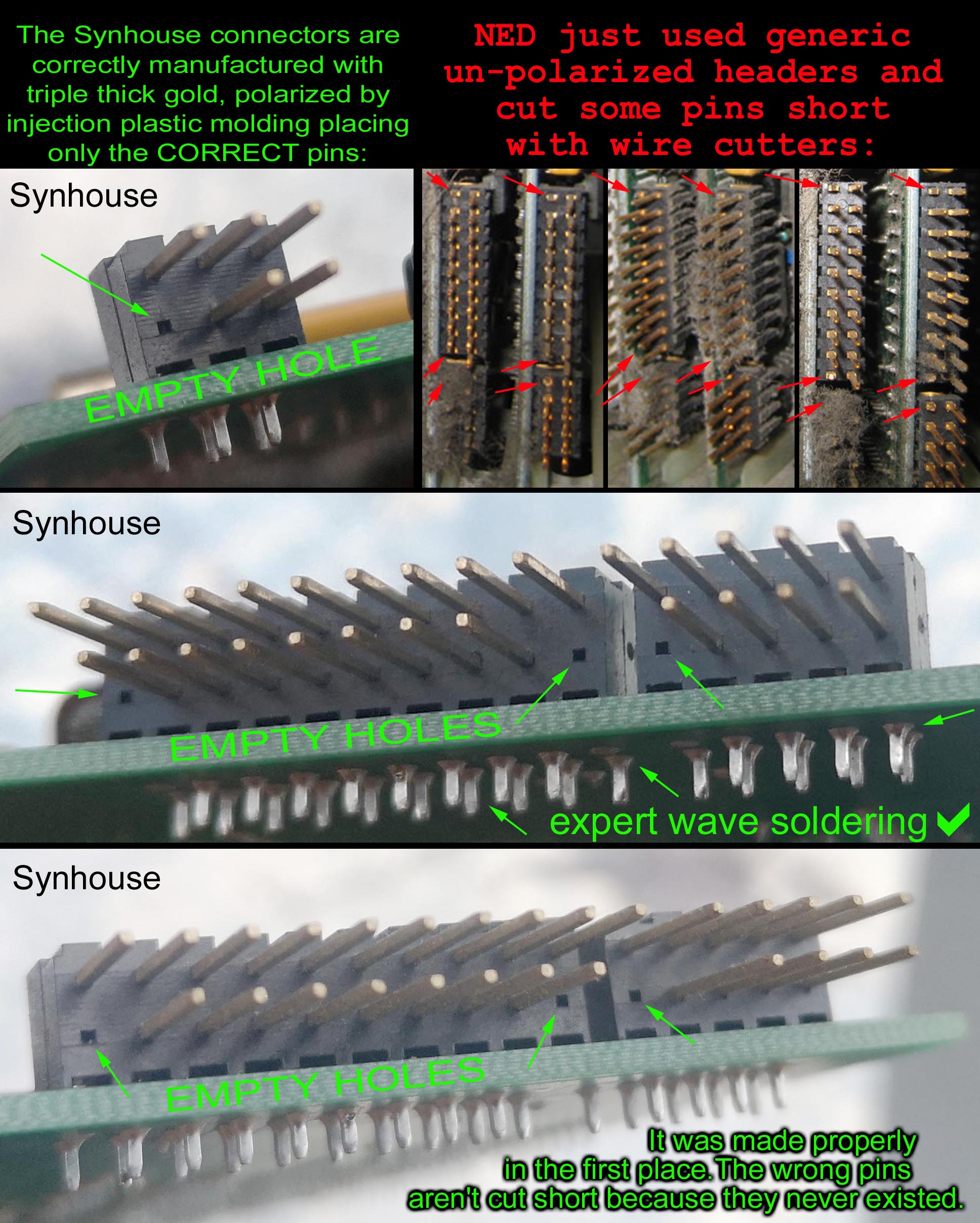
And then on something like this with the 3-pin header you can see fairly well in the photos, those are put into a special sawing machine that separates them with incredibly thin rotary saw blades, leaving an edge that is completely flat and nearly completely smooth. Instead of this. Off the top of my head I can think of three factory suppliers I've had for more than a decade that own that machine and have it at my disposal anytime I need it. Yeah, it's annoying to have to set that up and put in the spacers and correct number of saw blades in order to do it for a piddly 700-piece order for Synhouse, but I'm hooked up and they do it for me. And the ones you see here were run through the sawing machine only 5 days before this listing was started.
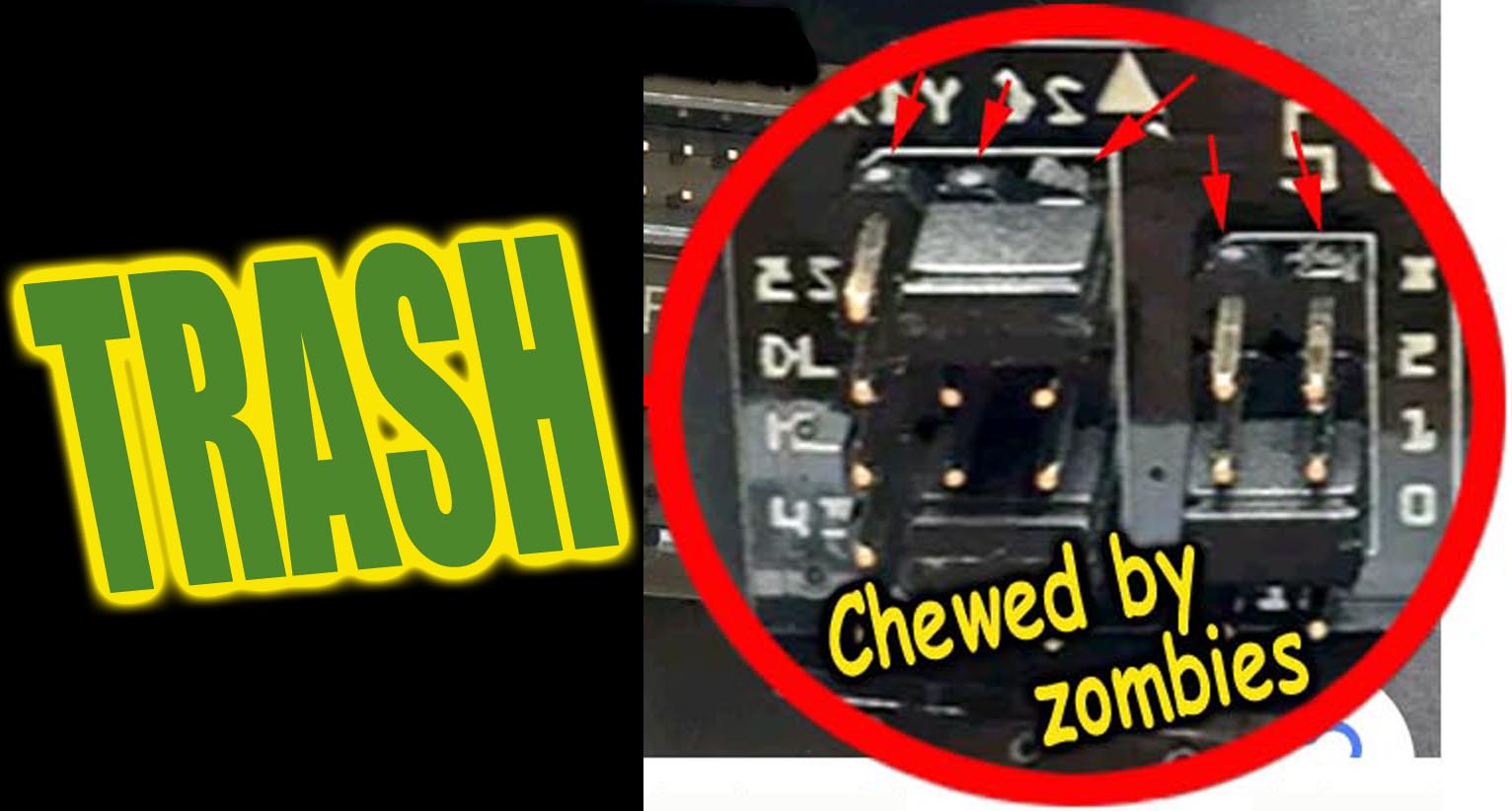
Also note the unusual female 90° dual row connector on this board. Those are fairly hard to find and those who find them don't know what factory they are coming from, and in every case are getting the cheapest part that the trading company they are buying from knows how to find. Conversely, Synhouse only uses the best ones I know of and buys them factory direct in a face-to-face transaction. They are gold-plated on the inside.
Seems excessive? Yes it is, and that's how everything from Synhouse is. Excessive.
Instead of "it's good enough"......said as they exit the market, having been the latest one stomped out by Synhouse.